Top model Karmen Pedaru wears Dior, Dolce & Gabbana, Dries Van Noten, Erdem, Louis Vuitton, Miu Miu and more styled by Peggy Schuller. Photographer Kristian Schuller captures Pedaru in ‘Babylon Berlin’ for the 25th anniversary September 2021 issue of Harper’s Bazaar Czech Republic.
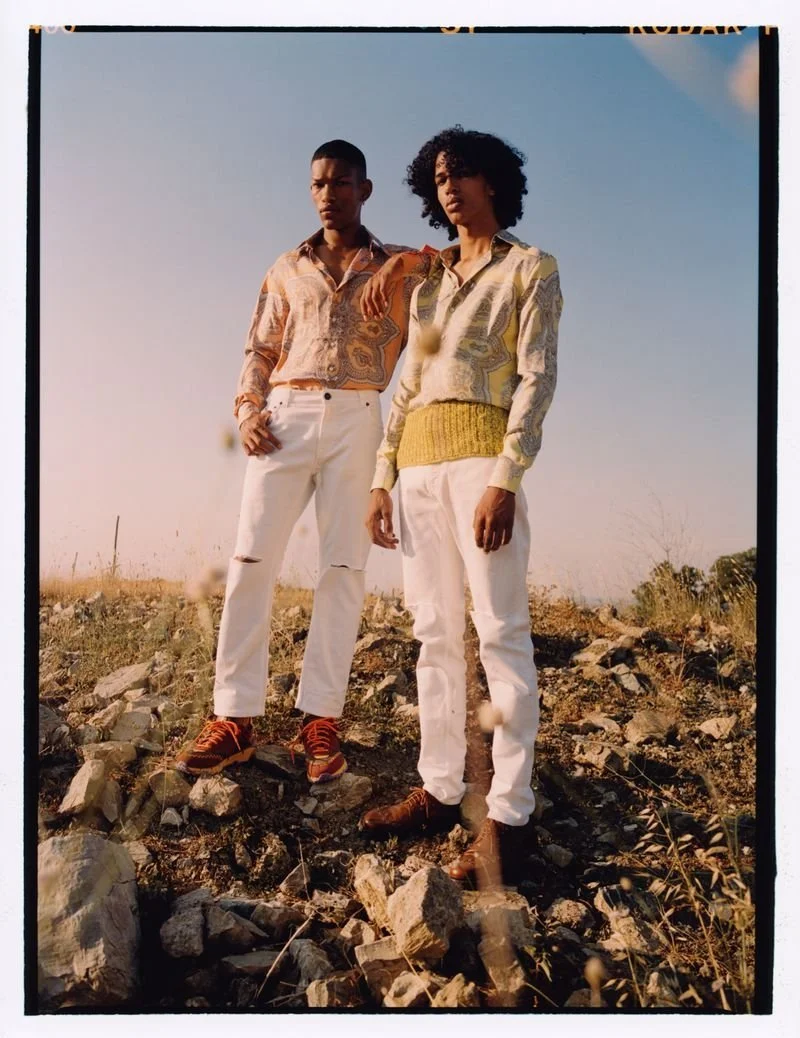
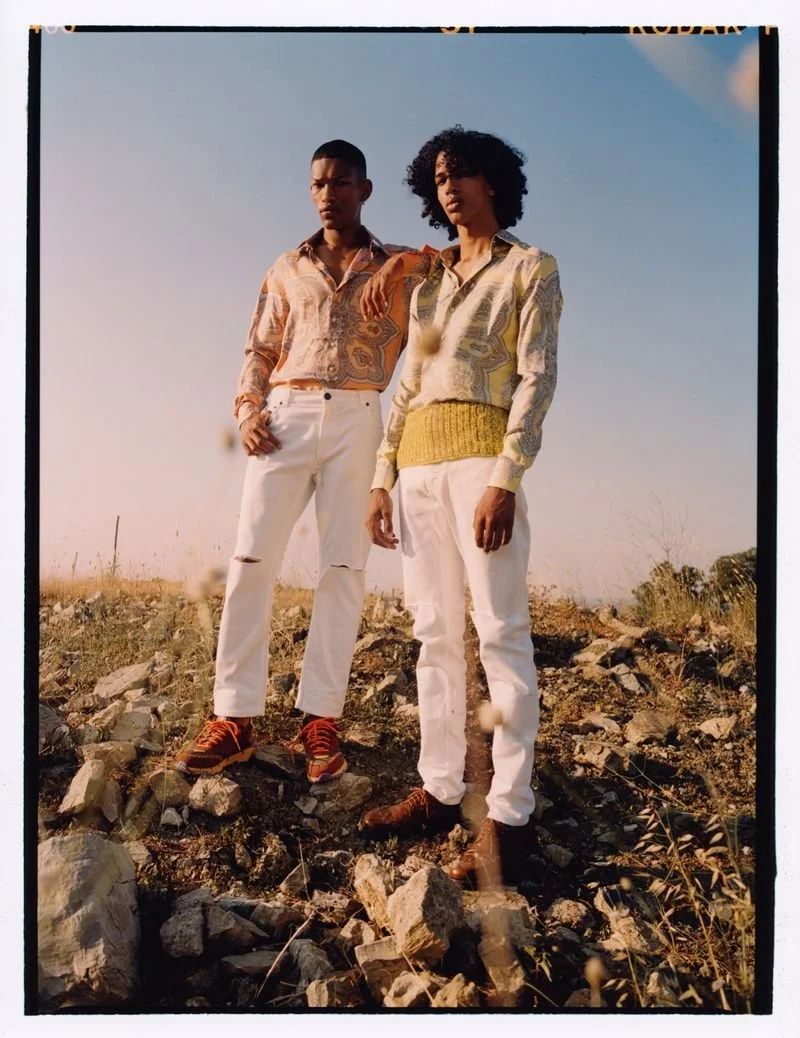
Models Brian Whitby and DameLo are styled by Matteo Greco in this Etro fashion story, with art direction by Sara Ferraris. Photographer Federico Sorrentino [IG] is behind the lens for The Greatest Magazine #20, 10th Anniversary Issue Fall 2021.
Supermodel Karen Elson joins forces with Dostoyevsky in a studio lesson around the creative talents employed by the most talented models in our fashion industry. Lilya Simonyan styles Elson in period-elegance lensed by Kat Irlin [IG] for the November 2021 issue of ELLE Russia.
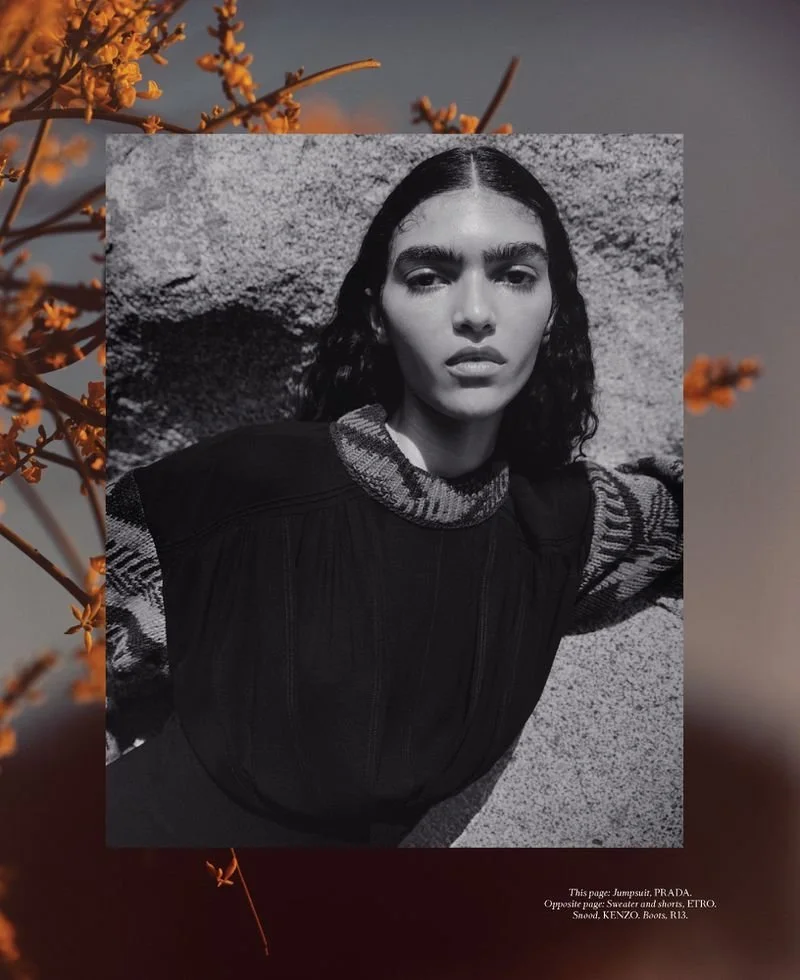
Model Irene Blanch is styled by Caterina Ospina Buitrago in ‘Land of the Dreams’, bucolic country style lensed by Ana Abril [IG] for Mujer Hoy October 2021./ Hair & makeup by Antonio Romero
Models Kiki Willems and Awar Odhiang front Saint Laurent’s [IG] Winter 2021 advertising campaign, lensed by Juergen Teller with art direction by YSL designer and creative director Anthony Vaccarello. The campaign was shot at Reynisfjara beach in Iceland, which was the site for the Saint Laurent fall-winter fashion show the luxury brand presented via video link.
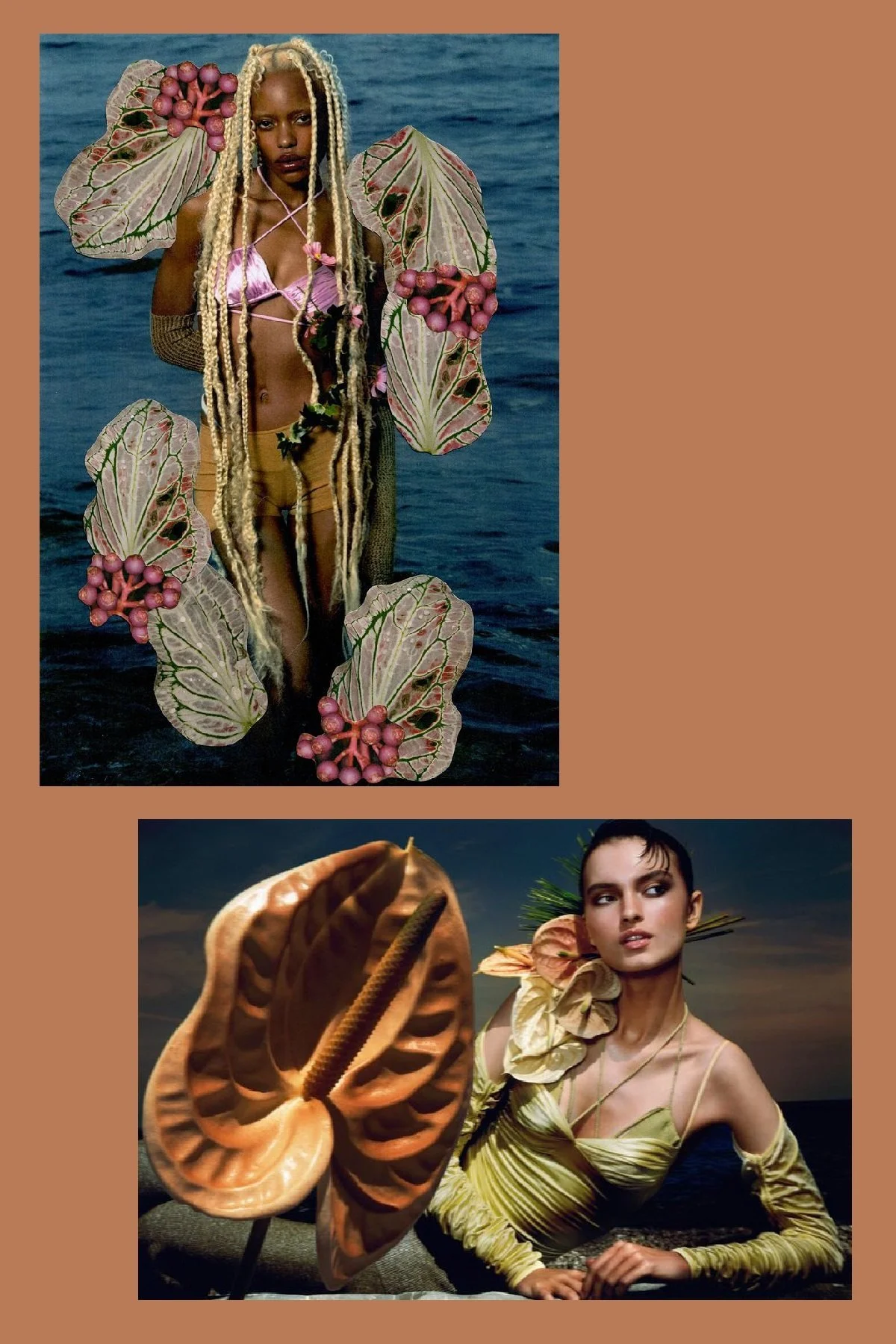
Lithuanian model Beegee Margenyte gets her mermaid dance on in the pages of ELLE Arabia September 2021. Fashion and beauty editor Dina Kabbani chooses the frothy, garden party clothes lensed by William Ferchichi [IG].
The Isa Boulder brand delivers an intoxicating Fall 2021 ad campaign that marries tightly to the brand’s DNA. Cecilia Basari and Yuli Suri were two friends living in Bali, with no experience in swimwear. The two women had never worn bikinis in public, writesVogue Paris.
Two years later, Basari and Suri are operating at a level way above buzz. Each piece is made by local craftsmen in Bali from recycled premium fabric.
Models Jiseop Lim, Seungchan Lee and Yoon Young Bae are styled by Desmond Lim and Eunnnnyoung Sohn in ‘The Way You Are’, lensed by Hyea W. Kang for Vogue Singapore September 2021. / Hair by Eunyoung Choi; makeup by Hyeryoung Park
American [species] Bumble Bees Could Gain ESA Protection
AOC has followed the problem of dwindling bee populations for almost a decade. But we were shocked to learn this week that the American bumble bee population has dropped nearly 90 percent. These vital pollinators for wildflowers and crops have vanished completely in eight states: Idaho, Maine, New Hampshire, North Dakota, Oregon, Rhode Island, Vermont and Wyoming.
Presently American bumble bees have no protection. But an August 2021 petition for protecting the American bumble bee under the Endangered Species Act [ESA] was filed by the Center for Biological Diversity and the Bombus Pollinator Association of Law Students, an Albany Law School student group.
Sounds great you say. Finally we’re taking action to protect our bees. Yet the plight of another bee species shows us just how complicated it is to protect these precious pollinators. Passing a law or writing a new policy does not guarantee any improvement in bee deaths.
We must create spaces — land with controlled uses of pesticides — in which bees can thrive and regenerate their population. However, America still can’t agree on the science of pesticides. Any mandate meets countless political headwinds, as Democrats and Republicans generally loathe each other on plans — or no plans — to protect our environment.
Anita Pozzo returns in back-to-back fashion stories (with a look back by us to look at her work) in ‘Easy Does It’, styled by Camille Bidault Waddington. Photographer Dan Martensen captures Pozzo for Harper’s Bazaar US October 2021./ Hair by Ryan Mitchell; makeup by Siddhartha Simone
Brazilian model Anita Pozzo strikes a series of revolutionary fashion poses worthy of a Che Guevara movie. Samuel Francois styles Pozzo in ‘Napoli’, lensed by Sofia Sanchezand Mauro Mongiello [IG] for Numéro France October 2021./ Hair by Kazue Deki; makeup by Lloyd Simmonds
Models Brian Whitby and DameLo are styled by Matteo Greco in this Etro fashion story, with art direction by Sara Ferraris. Photographer Federico Sorrentino [IG] is behind the lens for The Greatest Magazine #20, 10th Anniversary Issue Fall 2021.
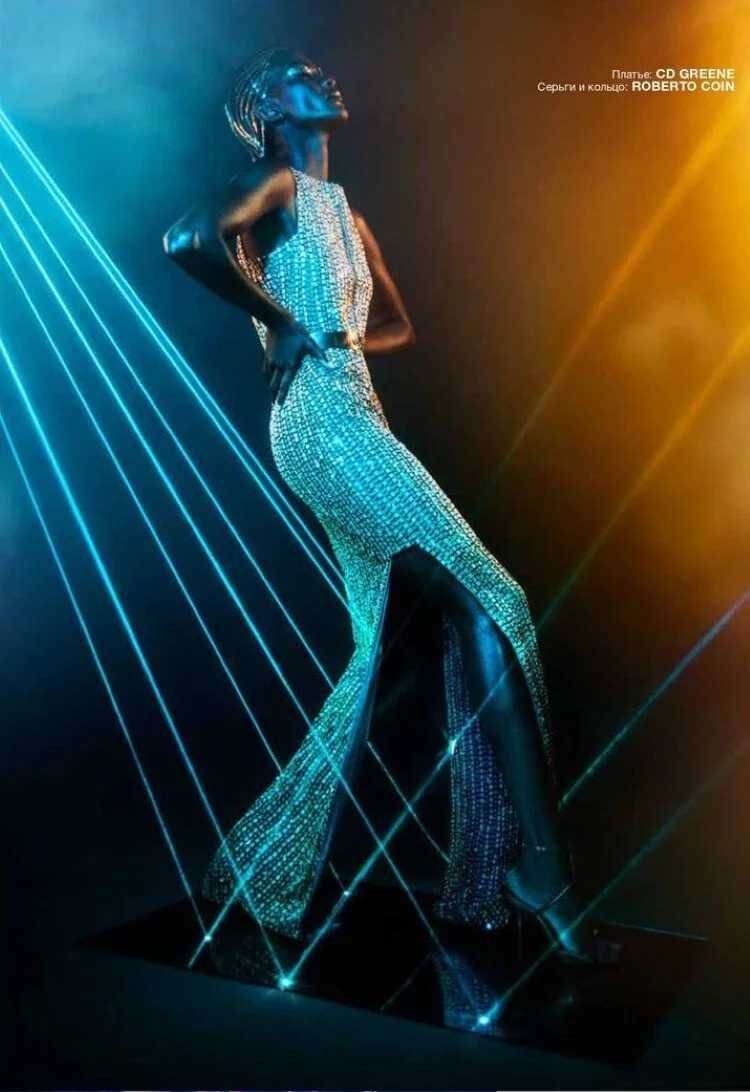
Model Aube Jolicoeur dazzles like a disco queen in ‘Nocturnal Lights’, styled by Cannon. Lindsay Adler [IG] flashes Jolicoeur for Numero Russia September 2021./ Hair by Gonn Kinoshita; makeup by Joanne Gair
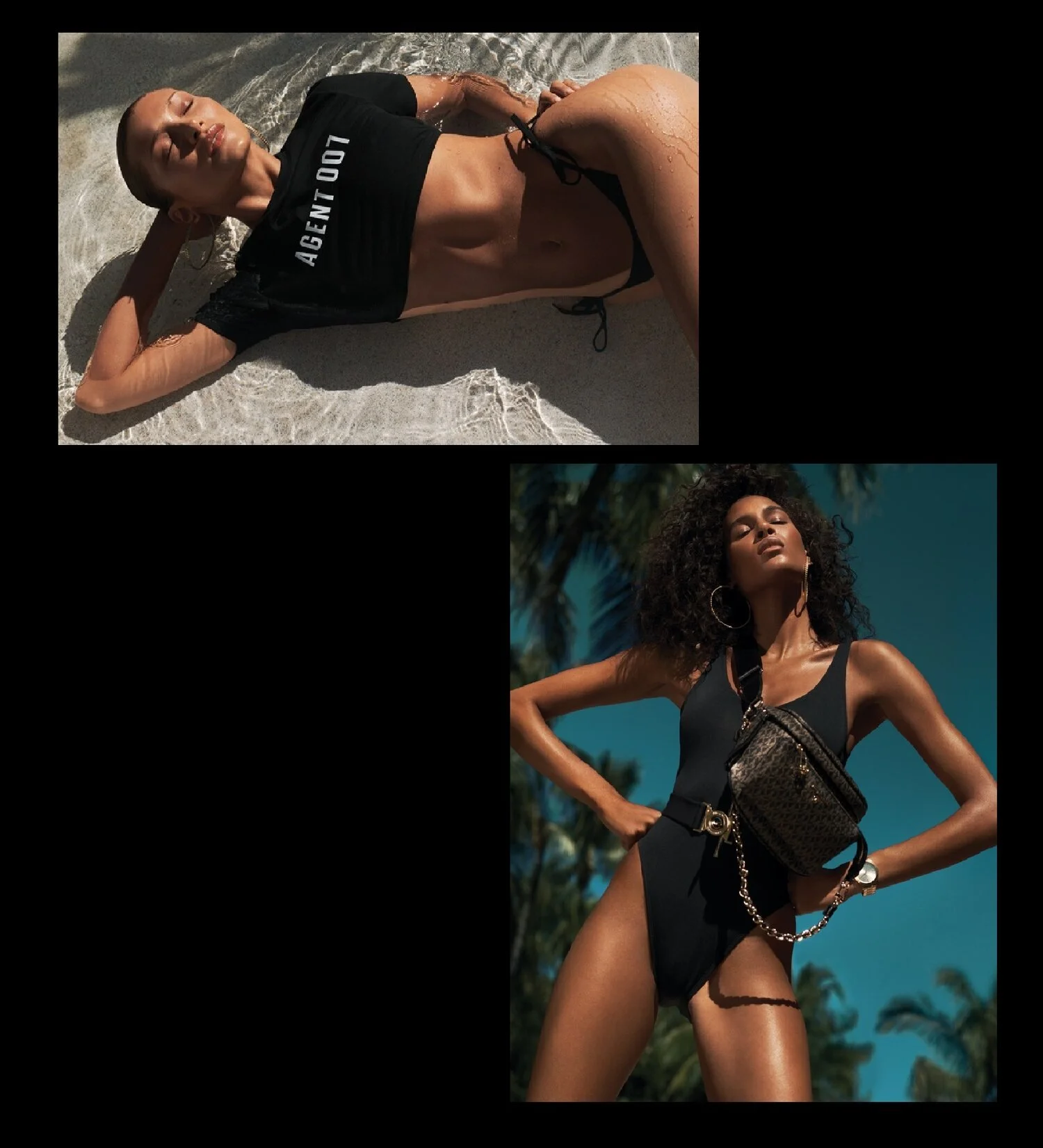
Glamazons Bella Hadid and Cindy Bruna bring unadulterated Bond Girl sex appeal to The Ocean Club, a Four Seasons Resort in the Bahamas. The duo fronts another piece of MICHAEL Michael Kors and Michael Kors mother brand collaboration with the new movie ‘No Time To Die’.
“I love the independence and the multifaceted character of each different Bond girl. She can be ANYTHING and everything. Anywhere and nowhere. Classic, cool and independent,” Bella enthuses about the 11-piece collection of swimwear, luggage, handbags and sandals. Martini glass is not included.
The Royal Ballet’s Francesca Hayward is known for her honest but also diplomatic assessment of life in the notoriously clubby world of ballet. There’s little pretense with Hayward — like her telling Porter Edit interviewer Kadish Morris:
“I don’t come from a dance family, so my whole career has been about just giving it a go and seeing what happens.”
Hayward credits Kevin O’Hare, director of the Royal Ballet, for seeing clearly her potential. “He plucked me out of the water very quickly and said, ‘You can do this.’”
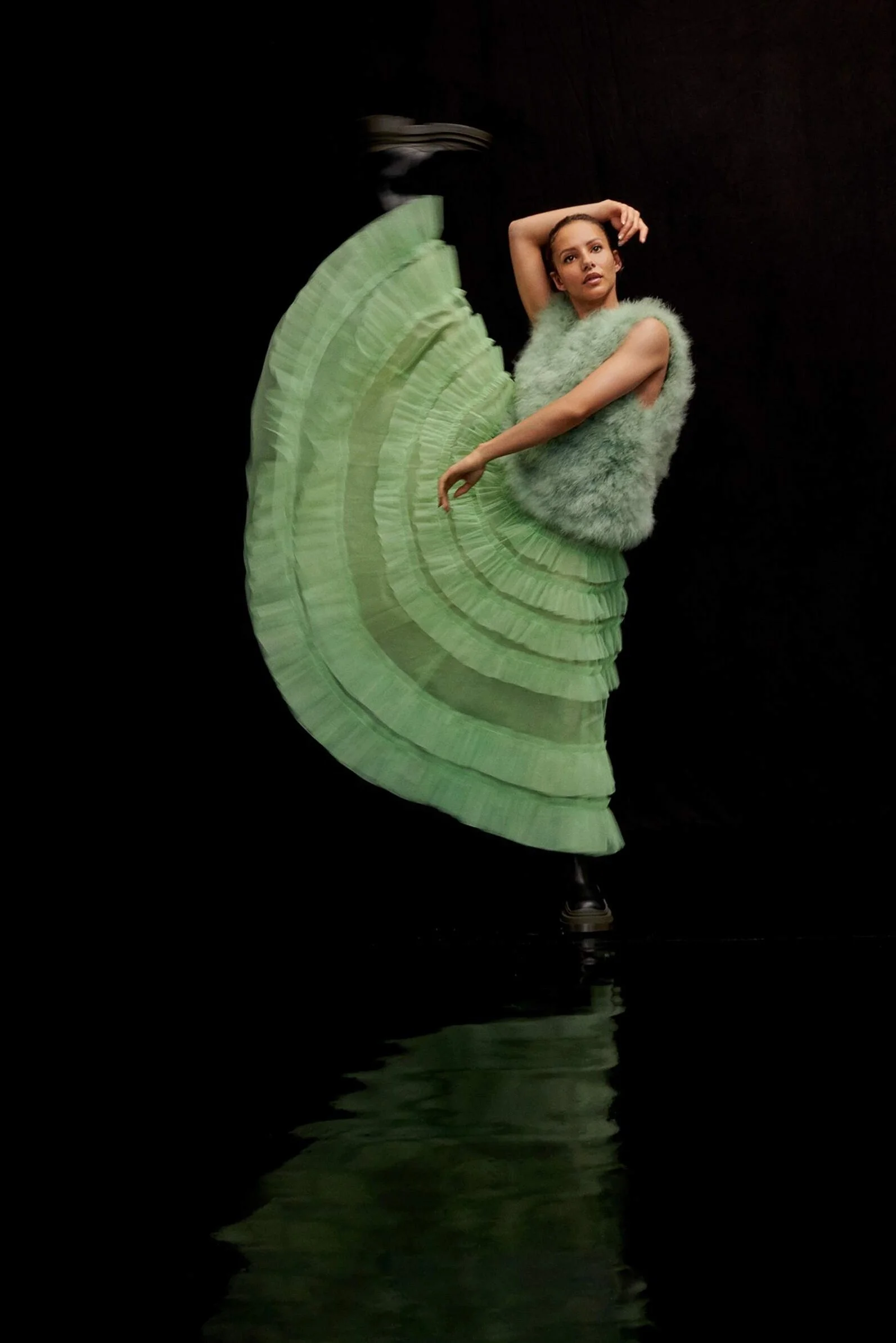
Francesca Hayward is styled by Jenny Kennedy in luxe fashion from Alaïa, A.W.A.K.E, Bottega Veneta, Dries Van Noten, Erdem, Molly Goddard, Saint Laurent, Simone Rocha and more. Ekua King[IG] captures the rising star in ‘Raise the Barre’ for Porter Edit’s October 18, 2021 cover story.
A map [middle image’ highlights the correlation between lynchings and Confederate monuments in America. The darker, redder colors indicate higher numbers of lynching victims; with each dot representing a Confederate monument (courtesy of the University of Virginia)
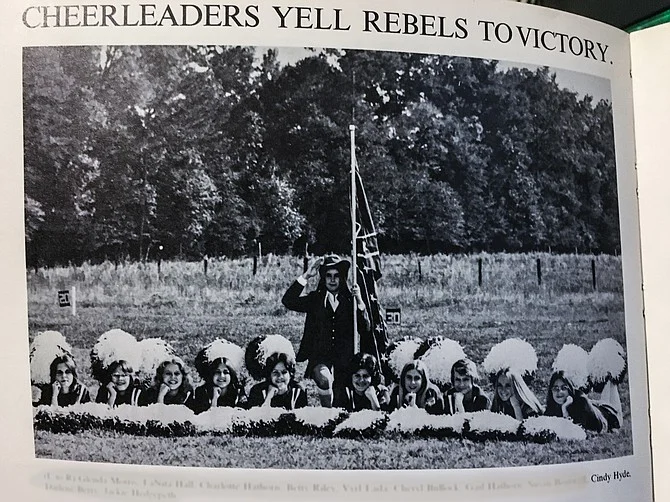
Large numbers of white southerners have long argued that Confederate monuments exist exclusively as symbols of southern pride and a proud history of rebellion against America’s federal government.
Led by United Daughters of the Confederacy, supporters of Confederate monuments refuse to acknowledge that there is any psychological damage to nonwhite people living their daily lives in the shadows of these relics to the days of slavery.
Former slave families should also celebrate the honor of the Old South, say white southerners while waving their Confederate flags in their faces. If people of color are bothered by these towering monuments of famed Confederate generals, they should praise God’s creation of an ideal society and way of life. Otherwise, people of color can hop the first boat back to Africa. Easy peasy.
A new study by researchers at the University of Virginia in Charlottesville challenges the noble premise of Confederate monuments.
Led by Kyshia Henderson of UVA’s Social Psychology Program, who worked with data scientist Samuel Powers and professors Sophie Trawalter, Michele Claibourn, and Jazmin Brown-Iannuzzi at the university’s Batten School of Leadership and Public Policy, the researchers documented a significant correlation between the numbers of Confederate monuments in an area and the number of documented lynchings from 1832 to 1950.
Published by the National Academy of Sciences, the researchers do not assert that the existence of Confederate monuments causes or provokes lynching. Their private beliefs — and those of the majority of researchers working in this area of study — do believe that Confederate statues are symbols of hate and also dominant power. But this study only concludes that there is a positive correlation between the two data sets: lynchings by county and Confederate statues by country.
“We can’t pinpoint exactly the cause and effect. But the association is clearly there,” Trawalter wrote. “At a minimum, the data suggests that localities with attitudes and intentions that led to lynchings also had attitudes and intentions associated with the construction of Confederate memorials.”
The researchers referenced another study associated with dedication speeches for Confederate memorials, finding that nearly half of the 30 dedication speeches reviewed involved “explicit racist language,” including phrases like “love of race” and “your own race and blood.”
A powerful and recently rediscovered film made during the 1965 Selma to Montgomery march for voting rights. Stefan Sharff’s intimate documentary reflects his youthful work in the montage style under the great Russian filmmaker Sergei Eisenstein. The film features moving spirituals. Marchers included Rev. Dr. Martin Luther King Jr. and his wife Coretta Scott King.
2015 Oscar Winning Best Song ‘Glory’ From Best Picture Nominated ‘Selma’
History of Selma to Montgomery Marches 1965
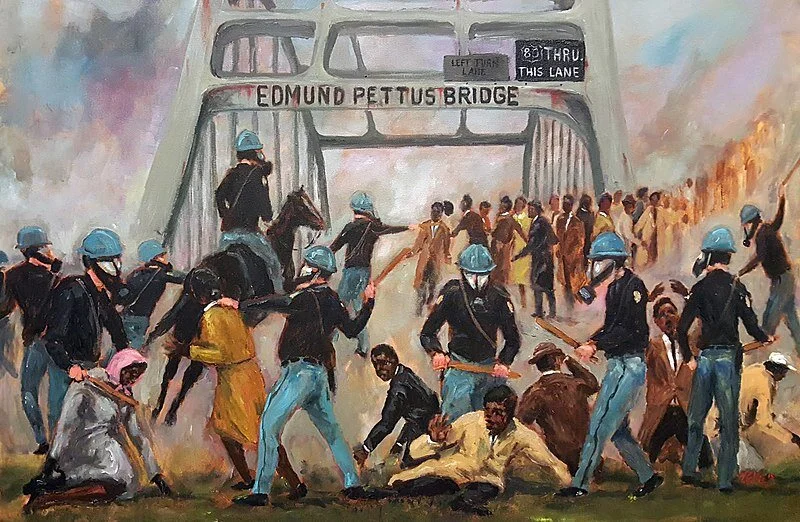
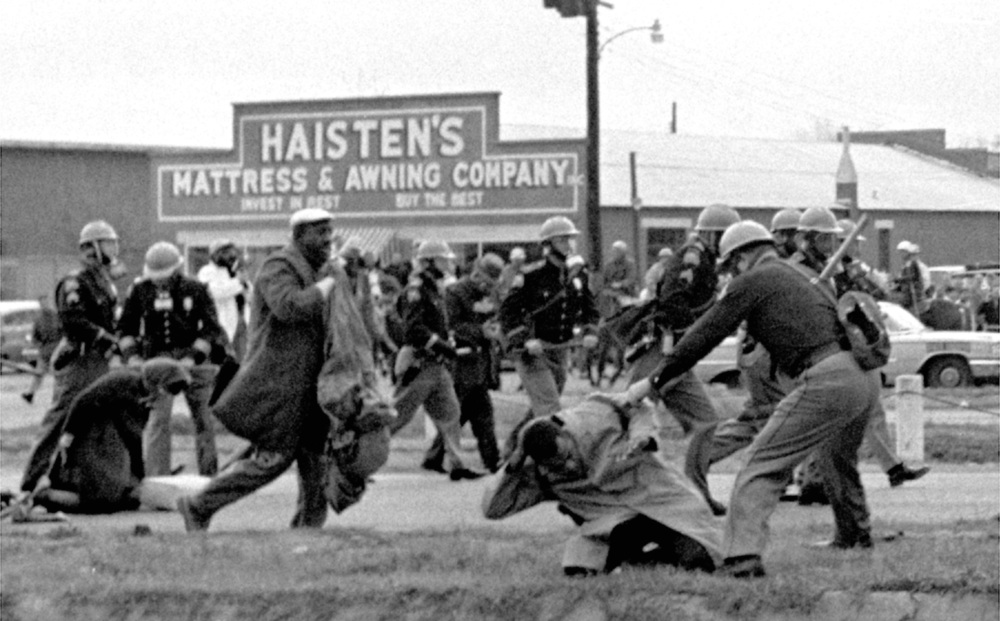
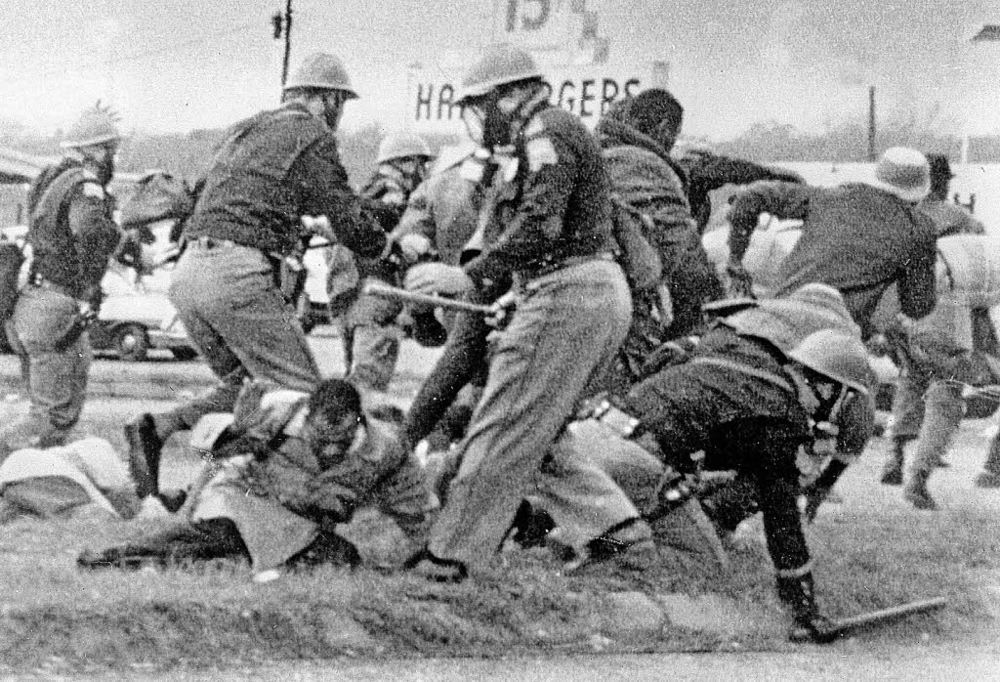
The Selma-to-Montgomery March for voting rights ended three weeks—and three events—that represented the political and emotional peak of the modern civil rights movement. On “Bloody Sunday,” March 7, 1965, some 600 civil rights marchers headed east out of Selma on U.S. Route 80. They got only as far as the Edmund Pettus Bridge six blocks away, where state and local lawmen attacked them with billy clubs and tear gas and drove them back into Selma. Two days later on March 9, Martin Luther King, Jr., led a “symbolic” march to the bridge. Then civil rights leaders sought court protection for a third, full-scale march from Selma to the state capitol in Montgomery.
Federal District Court Judge Frank M. Johnson, Jr.,weighed the right of mobility against the right to march and ruled in favor of the demonstrators. “The law is clear that the right to petition one’s government for the redress of grievances may be exercised in large groups…,” said Judge Johnson, “and these rights may be exercised by marching, even along public highways.” On Sunday, March 21, about 3,200 marchers set out for Montgomery, walking 12 miles a day and sleeping in fields. By the time they reached the capitol on Thursday, March 25, they were 25,000-strong. Less than five months after the last of the three marches, President Lyndon Johnson signed the Voting Rights Act of 1965—the best possible redress of grievances. Source: US Natl Park Service
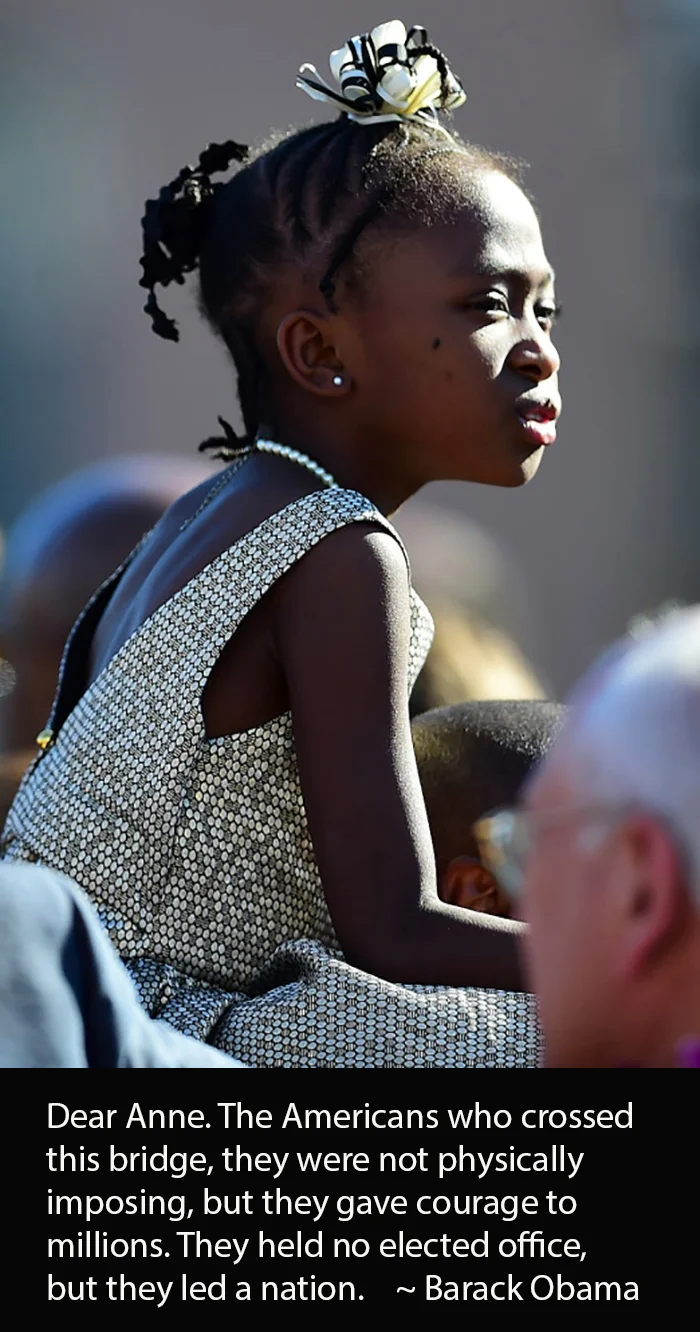
President Barack Obama’s Address In Selma March 7, 2015
Photos March, 1965
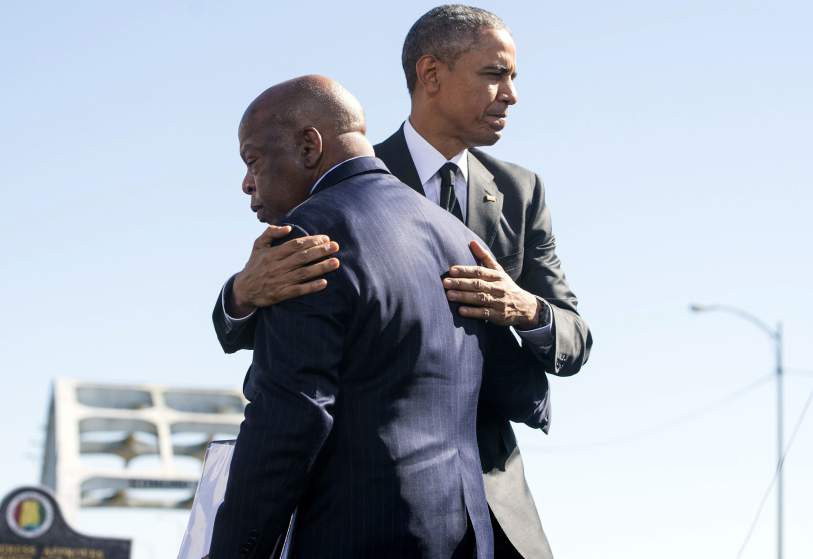
President Barack Obama embraces Congressman John Lewis in Selma, March 7, 2015
March 7, 1965 march aborted at Edmund Pettus Bridge.It is a rare honor in this life to follow one of your heroes. And John Lewis is one of my heroes.
Now, I have to imagine that when a younger John Lewis woke up that morning fifty years ago and made his way to Brown Chapel, heroics were not on his mind. A day like this was not on his mind. Young folks with bedrolls and backpacks were milling about. Veterans of the movement trained newcomers in the tactics of non-violence; the right way to protect yourself when attacked. A doctor described what tear gas does to the body, while marchers scribbled down instructions for contacting their loved ones. The air was thick with doubt, anticipation, and fear. They comforted themselves with the final verse of the final hymn they sung:
No matter what may be the test, God will take care of you;
Lean, weary one, upon His breast, God will take care of you.
Then, his knapsack stocked with an apple, a toothbrush, a book on government – all you need for a night behind bars – John Lewis led them out of the church on a mission to change America.
There are places, and moments in America where this nation’s destiny has been decided. Many are sites of war – Concord and Lexington, Appomattox and Gettysburg. Others are sites that symbolize the daring of America’s character – Independence Hall and Seneca Falls, Kitty Hawk and Cape Canaveral.
Selma is such a place.
Congressman John Lewis lead the first Selma, March and was severely beaten in the head and body on March 7, 2965And because of men and women like John Lewis, Joseph Lowery, Hosea Williams, Amelia Boynton, Diane Nash, Ralph Abernathy, C.T. Vivian, Andrew Young, Fred Shuttlesworth, Dr. King, and so many more, the idea of a just America, a fair America, an inclusive America, a generous America – that idea ultimately triumphed.
As is true across the landscape of American history, we cannot examine this moment in isolation. The march on Selma was part of a broader campaign that spanned generations; the leaders that day part of a long line of heroes.
We gather here to celebrate them. We gather here to honor the courage of ordinary Americans willing to endure billy clubs and the chastening rod; tear gas and the trampling hoof; men and women who despite the gush of blood and splintered bone would stay true to their North Star and keep marching toward justice.
Modern-day nomads are slowing down, honoring traditions and the roots of our culture. This T Magazine fall 2021 feature on ‘Winter’s Fluffiest and Furriest Outwear’ highlights not only whimsical textures in which we are one with furry creatures in an animistic, psychological relationship.
Presented by models like Briana Michelle and Cherokee Jack with close, ancestral ties to the land, we are all invited to pay our respects to cultures and a biosystem eons older than the prevailing patriarchal, white-man’s so-called Christian vision of dominance over the the earth and its peoples.
AOC isn’t suggesting that all references to indigenous cultures belong to ‘the good guys’.
Consider the Arizona man Jacob Chansley, known as the QAnon Shaman, who led an insurrection against the US Capitol on January 6. We must not be naive about men wearing big, furry hats with horns. They can kill you.
Photographer Andreas Ortner’s[IG]jewelry story featuring rising model Mariama Ndure is a visual palette cleanser. Crisp, bold, striking images of Ndure are styled by Jana Kapounova, who marries high-neck sweaters and knitted headcoverings with spare, luxe jewelry designs. The modern, sophisticated glamour appears in the pages of Harper’s Bazaar Czech’s November 2021 issue.
Models Ash Foo, Nyarach Abouch Ayuel, Precious Lee, Rebecca Leigh Longendyke, Sacha Quenby, Joan Smalls and Mao Xiaoxing are in a festive mood for British Vogue’s blockbuster, Adele-cover November issue. Kate Phelan styles the cast in passionate shades of red and rose anchored in black and white gala looks for ‘Up All Night’, lensed by Rasharn Agyemang [IG] ./ Hair by Shiori Takahashi; makeup by Loten Holmqvist