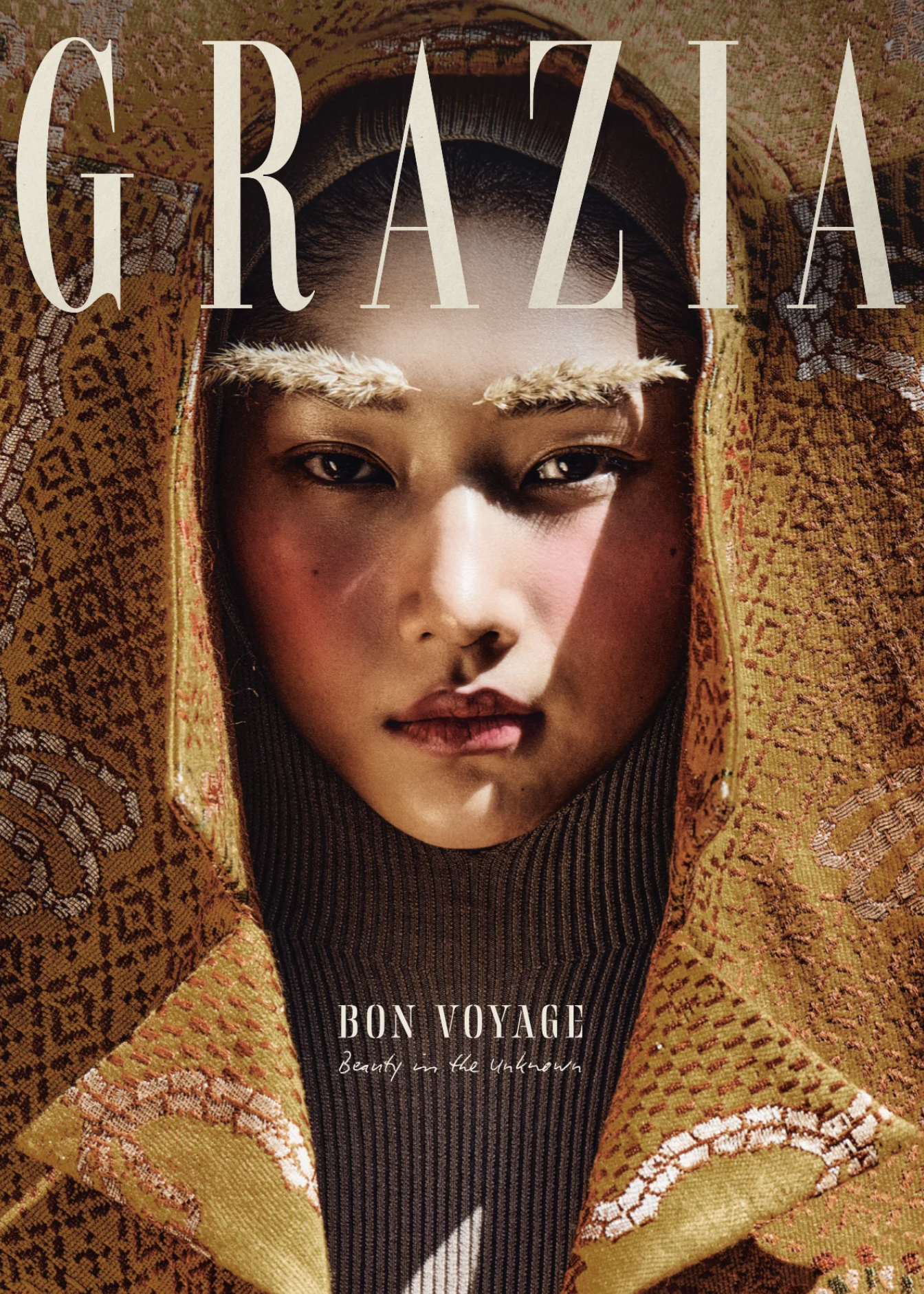
We’ve pulled out this story focused on ‘The Silk Road’ to honor Avani Rai’s father, renowned photographer Raghu Rai and equally the work of her mother, conservation architect Gurmeet Sangha Rai.
A key plank of AOC’s vision of the original Renaissance Humanism vs New Humanism is its lack of a Eurocentric lens. This global embrace of humanity has motivated me my entire life, with travels and a career around the world more times than I can count.
The Place of Ladakhi in Silk Roads History
The fashion story takes us to Ladakh, which was never an isolated mountain kingdom; it was the vibrant pulse point of the Trans-Himalayan Silk Road from as early as the 2nd century BCE. Its primary town, Leh, acted as a massive commercial hub where the trade routes of Central Asia, South Asia, and Tibet converged.
Trust was the glue that bound these traders in successful commerce and the beginnings of international business communities. These ancient traders have so much to teach us about dealing with the ‘other’.
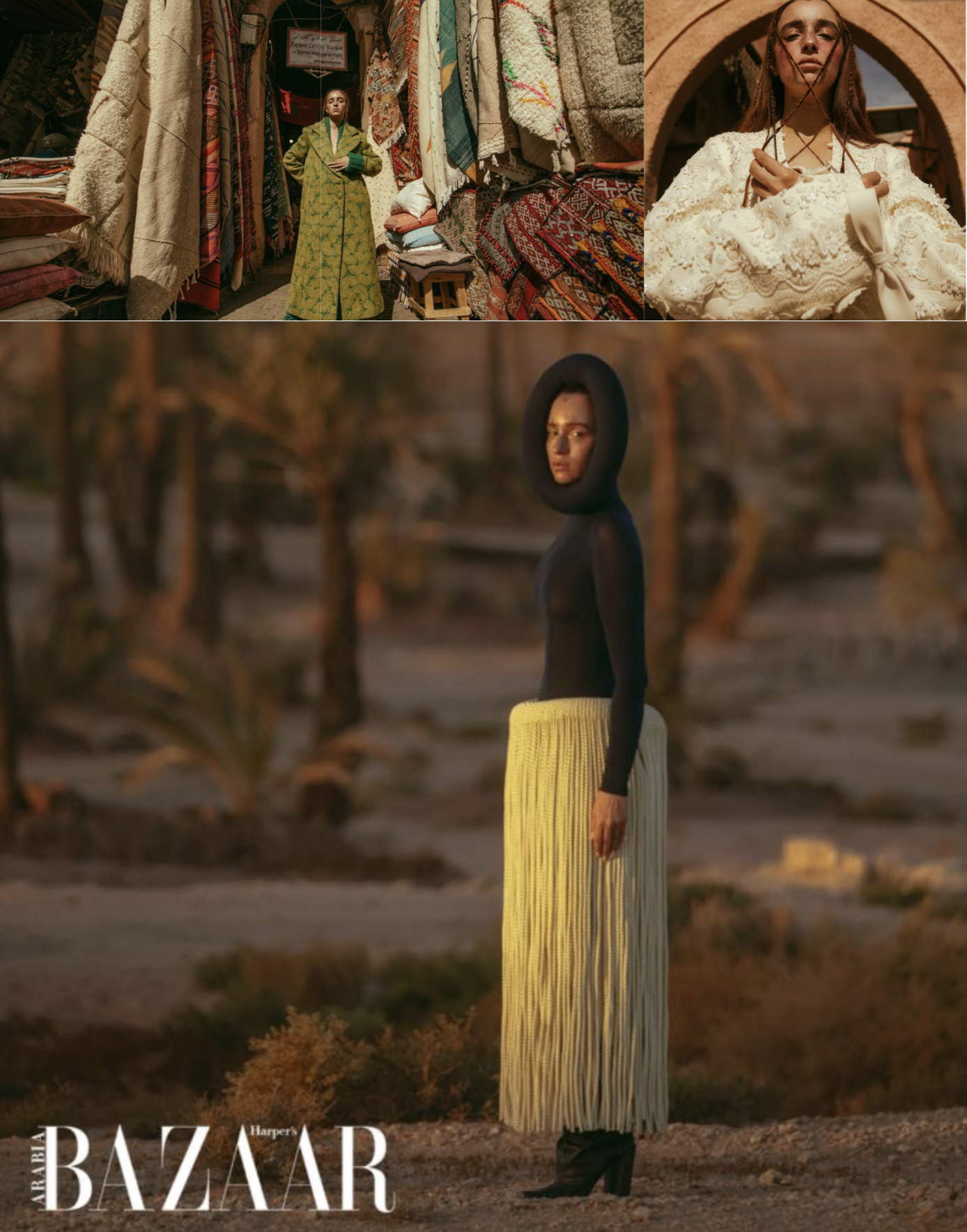
Photographer Élio Nogueira [IG] taps visually into a story shaped by centuries and the lives of traders.
Beyond the movement of physical goods, Marrakech facilitated a massive exchange of knowledge and culture that spread widely in the region.
During the early Middle Ages [Europe’s "Dark Ages"], much of the Greek philosophical and scientific corpus was lost to the West, as a result of the Crusades. However, it was preserved and expanded upon in the Islamic world.
In an action of true humanism, scholars from the Arab world and the West or European world, were joined by Jewish scholars — often bilingual or multilingual — to restore and expand on all the critical knowledge destroyed in the Crusades.