NY Museum Will Move Teddy Roosevelt Statue Viewed As Overtly Racist

“The world does not need statues, relics of another age, that reflect neither the values of the person they intend to honor nor the values of equality and justice,” said Theodore Roosevelt IV, a great-grandson of the 26th president, said in a statement approving the removal.Credit...Caitlin Ochs for The New York Times

“The world does not need statues, relics of another age, that reflect neither the values of the person they intend to honor nor the values of equality and justice,” said Theodore Roosevelt IV, a great-grandson of the 26th president, said in a statement approving the removal.Credit...Caitlin Ochs for The New York Times

The bronze statue of America’s 26th president, Teddy Roosevelt, will be moved.from the entrance to the American Museum of History in New York, where it has resided since 1940. I’ve passed it many times on my way into the museum and never seriously considered how it impacted people of color — especially those of African lineage — and Native Americans.

Looking at it now, I understand completely why the statue had come to symbolize a painful legacy of colonial expansion and racial discrimination.

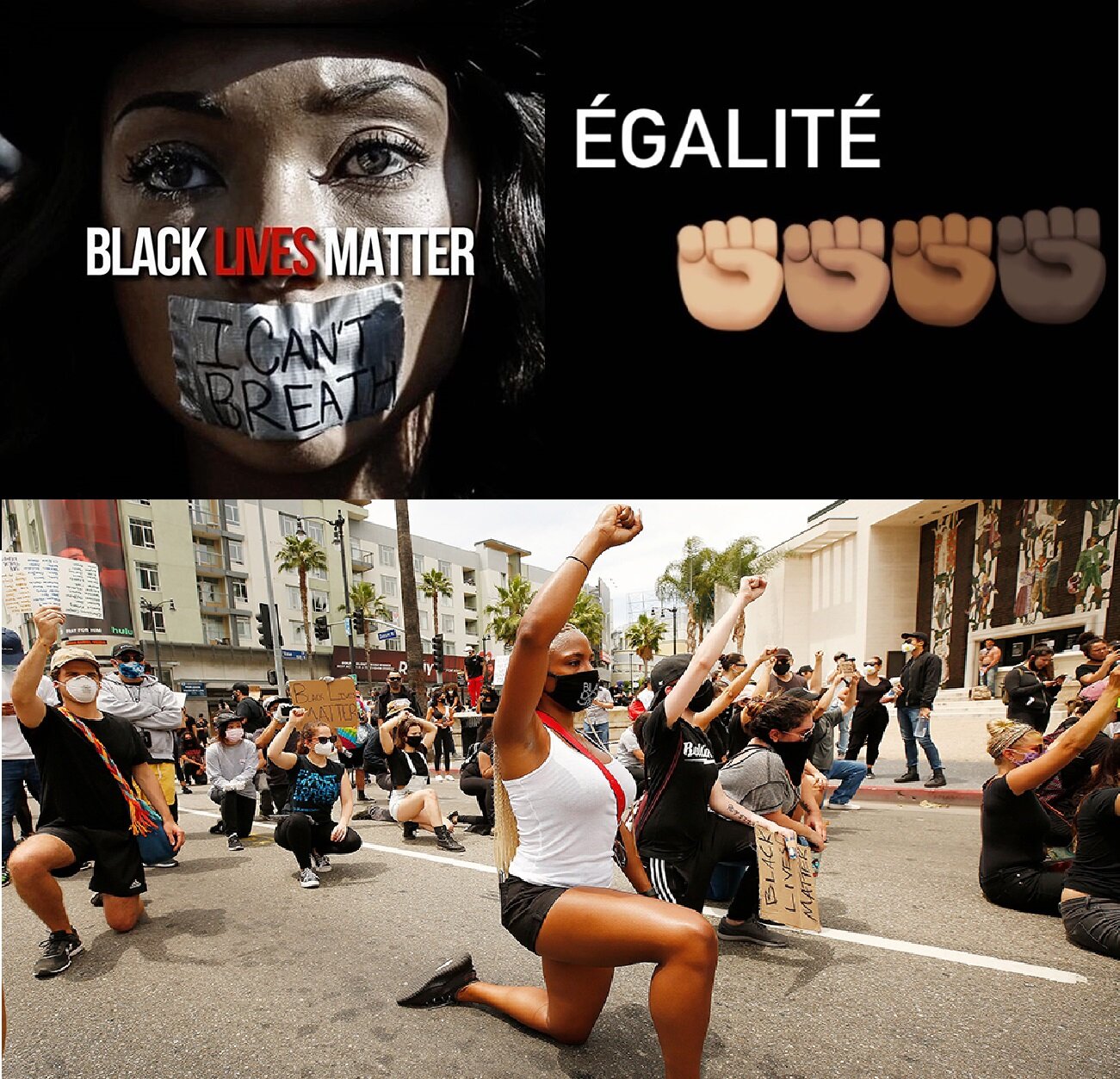
“Over the last few weeks, our museum community has been profoundly moved by the ever-widening movement for racial justice that has emerged after the killing of George Floyd,” the museum’s president, Ellen V. Futter, said in an interview with the New York Times. “We have watched as the attention of the world and the country has increasingly turned to statues as powerful and hurtful symbols of systemic racism.”

Futter made it clear that the museum’s decision is based on the “hierarchical composition” of the statue and not Roosevelt the man, who is revered as “a pioneering conservationist.” I will add that Roosevelt being clothed and the other two men more naked sends its own message beyond physical scale.

A Roosevelt family member released a statement approving the removal.

“The world does not need statues, relics of another age, that reflect neither the values of the person they intend to honor nor the values of equality and justice,” said Theodore Roosevelt IV, age 77, a great-grandson of the 26th president and a museum trustee. “The composition of the Equestrian Statue does not reflect Theodore Roosevelt’s legacy. It is time to move the statue and move forward.”

In a compensatory gesture, the museum is naming its Hall of Biodiversity for Roosevelt “in recognition of his conservation legacy,” Futter said.

Not all critics agree with the argument that President Theodore Roosevelt didn’t embrace racial hierarchy.

[They] “have pointed to President Roosevelt’s opinions about racial hierarchy, his support of eugenics theories and his pivotal role in the Spanish-American War. Some see Roosevelt as an imperialist who led fighting in the Caribbean that ultimately resulted in American expansion into colonies there and in the Pacific including Puerto Rico, Hawaii, Guam, Cuba and the Philippines.

A nationalist, Roosevelt, in his later years became overtly racist, historians say, endorsing sterilization of the poor and the intellectually disabled.”

Property Heirs Argue Confederate Statue Rights in New VA Court Move

Top photo: A 2010 picture of the statue of Nathan Bedford Forrest, which was removed from Health Sciences Park (formerly Nathan Bedford Forrest Park) in downtown Memphis last December. (Wikimedia). Bottom photo: BY CURRIER & IVES (NOT SIGNED) - THIS IMAGE IS AVAILABLE FROM THE UNITED STATES LIBRARY OF CONGRESS'S PRINTS AND PHOTOGRAPHS. VIA WIKI COMMONS

Top photo: A 2010 picture of the statue of Nathan Bedford Forrest, which was removed from Health Sciences Park (formerly Nathan Bedford Forrest Park) in downtown Memphis last December. (Wikimedia). Bottom photo: BY CURRIER & IVES (NOT SIGNED) - THIS IMAGE IS AVAILABLE FROM THE UNITED STATES LIBRARY OF CONGRESS'S PRINTS AND PHOTOGRAPHS. VIA WIKI COMMONS

Dead Men's Property Heirs Argue Confederate Statue Rights in New VA Court Move

By Allison Anna Tait, Professor of Law, University of Richmond. First published on The Conversation

The latest chapter in the United States’ ongoing debate about Confederate monuments involves some unexpected opinions: those of long-dead land donors.

Responding to sustained, nationwide protests over police brutality, Virginia Gov. Ralph Northam on June 4 vowed to dismantle a prominent statue of the Virginia-born Confederate General Robert E. Lee in Richmond, the state capital.

That plan was put on pause just four days later when a state judge issued an injunction based on the petition of a man whose ancestor, Otway Allen, gave Virginia the land the the sculpture sits on.

In his petition to the court, William C. Gregory claimed that removal of the statue would violate the conditions of his great-grandfather’s 1890 land deed, which says Virginia “will hold said Statue and pedestal and Circle of ground perpetually sacred to the Monumental purpose … and that she will faithfully guard it and affectionately protect it.”

On June 19, a judge will decide whether to let the 10-day injunction expire, enabling Richmond to dismantle its Lee monument, or to obey the donor’s wishes – at least temporarily.

Richmond isn’t the only Virginia city where a centuries-old land deed is a legal hurdle in removing Confederate monuments many see as a symbol of white supremacy. Nearby Charlottesville has faced similar questions about the intentions of the philanthropist who donated its controversial Robert E. Lee statue.

How DC Mayor Bowser Used Graffiti to Protect Public Space

How DC Mayor Bowser Used Graffiti to Protect Public Space

When President Donald Trump sent heavily armed federal law enforcement officers and unidentified officers in riot gear into Washington, D.C. during the height of protests recently, Mayor Muriel E. Bowser responded by painting “BLACK LIVES MATTER” directly on the street leading to the White House.

While many spoke of it as a daring political act, for artists like me, it was also an act of urban intervention, an artistic act intended to transform an existing structure or institution, that reclaimed public space back for the public. And she accomplished this with little physical matter at all.

Her action – expressing dissent by marking an oppressive environment – references graffiti, which has been called the “language of the ignored.”

Art scholars note that most types of graffiti are meant to claim or reclaim territory by those who are systematically excluded. “Writers” often work quickly and at night, when they are less likely to be seen and arrested for painting on others’ property without consent.

Bowser’s action would likely be considered vandalism if not for the fact that it was carried out by the city’s Department of Public Works, using city funds. She wielded municipal services as artistic tools to condemn another state-sanctioned action, the violence perpetrated against Black people.

Banksy Says A White System Has Ruined Black Lives, As American Flag Does Slow Burn

Banksy has left his personal testimony against racial discrimination, in response to the death of George Floyd and protests that have spread all over the world. Publishing the new work for his 9.3 million Instagram followers, Banksy’s American flag is about to catch fire, lit by a candle placed next to a photo with a black silhouette.

In Banksy’s own words:

“At the beginning I thought of keeping silent and listening to black people on this problem. But why? The problem is mine, not them ". 

“The white system has ruined the lives of black people. It is like a broken pipe that floods the downstairs apartment. It's up to the whites to fix it. "

Fear, More Than Hate, Feeds Online Bigotry and Real-World Violence

Fear, More Than Hate, Feeds Online Bigotry and Real-World Violence

By Adam G. Klein, Assistant Professor of Communication Studies, Pace University. First published on The Conversation.

When a U.S. senator asked Facebook CEO Mark Zuckerberg, “Can you define hate speech?” it was arguably the most important question that social networks face: how to identify extremism inside their communities.

Hate crimes in the 21st century follow a familiar pattern in which an online tirade escalates into violent actions. Before opening fire in the Tree of Life synagogue in Pittsburgh, the accused gunman had vented over far-right social network Gab about Honduran migrants traveling toward the U.S. border, and the alleged Jewish conspiracy behind it all. Then he declared, “I can’t sit by and watch my people get slaughtered. Screw your optics, I’m going in.” The pattern of extremists unloading their intolerance online has been a disturbing feature of some recent hate crimes. But most online hate isn’t that flagrant, or as easy to spot.

As I found in my 2017 study on extremism in social networks and political blogs, rather than overt bigotry, most online hate looks a lot like fear. It’s not expressed in racial slurs or calls for confrontation, but rather in unfounded allegations of Hispanic invaders pouring into the country, black-on-white crime or Sharia law infiltrating American cities. Hysterical narratives such as these have become the preferred vehicle for today’s extremists – and may be more effective at provoking real-world violence than stereotypical hate speech.