Marique Schimmel Fronts 'Safari Deluxe' | The Woolly Mammoths Are Coming

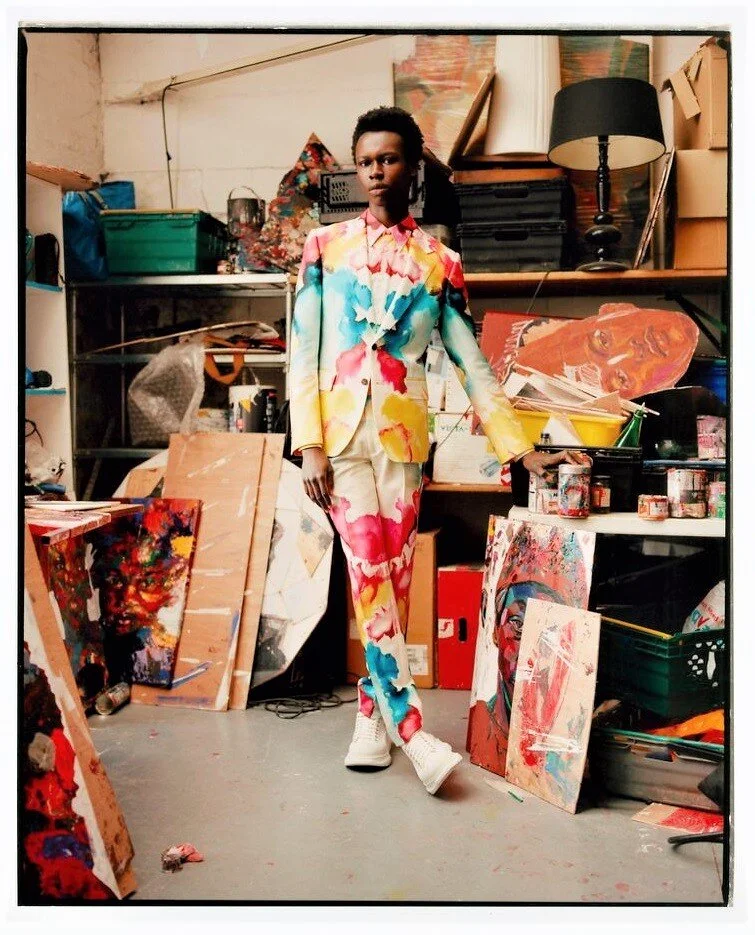
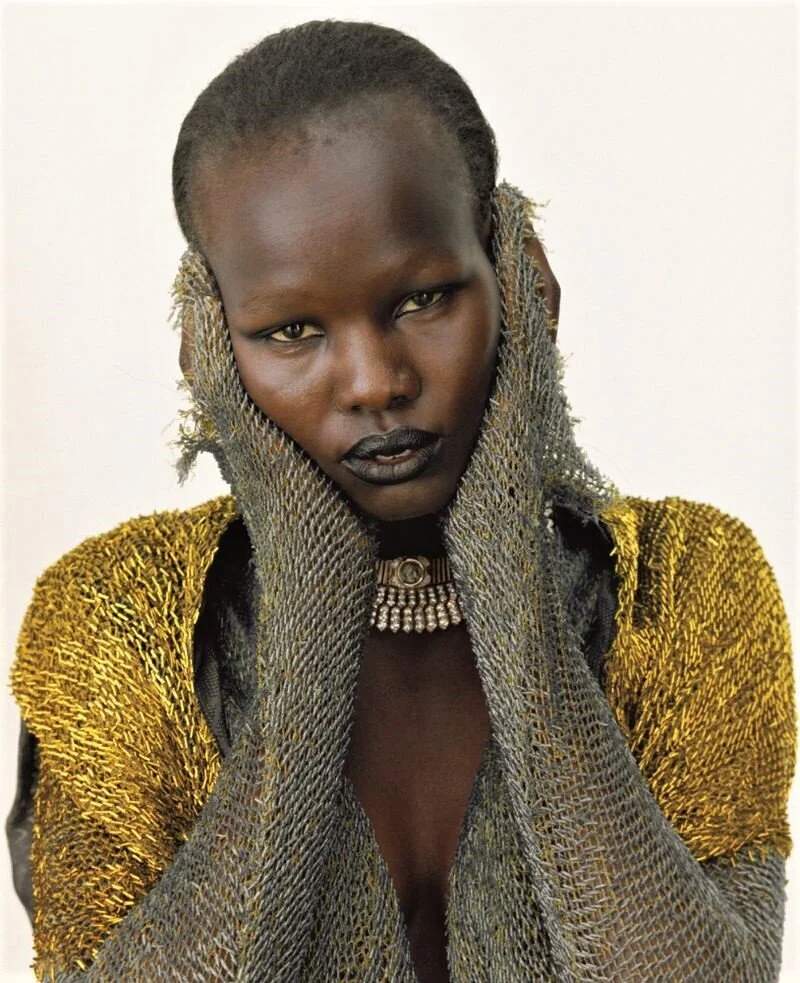
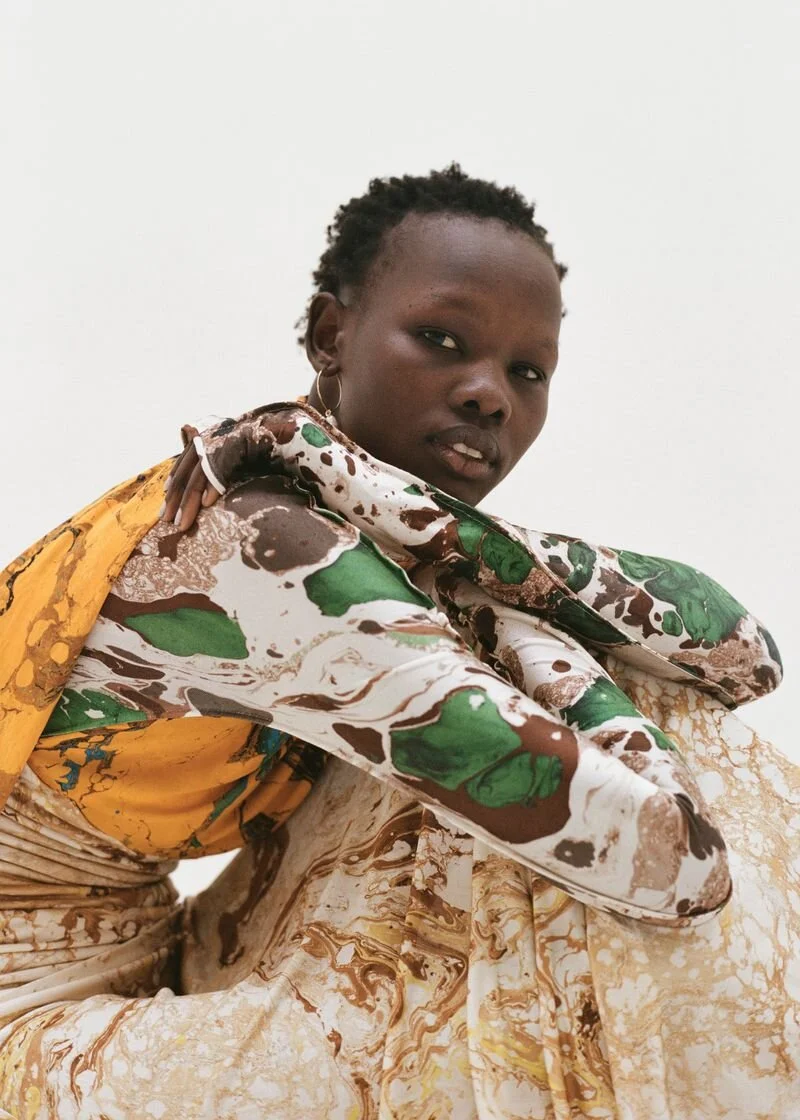
Marique Schimmel Fronts 'Safari Deluxe' Lensed By Laura Sciacove Nciacovelli for Marie Claire Italy's May 2017 'Safari Deluxe'.

Safari looks in May magazines are standard fare -- except for Maria Grazia Chiuri presenting her first cruise collection for Christian Dior on May 11 at the Upper Los Virgenes Canyon Open Space Preserve in Calabasas, Ca. Continuing her design inspiration inspired by strong women worldwide, Chiuri turned to stellar American artist Georgia O'Keeffe,  along with the writings of feminist shamanic author Vicki Noble. The LATimes writes

Although all of the pieces bearing the Lascaux-inspired imagery caught the eye, the most memorable were the full skirts, sleeveless dresses and blazers that rendered the drawings of oxen, deer and horses in a silk jacquard that had a dusty golden cast to it.

AOC covered the opening of France's new exhibition center Lascaux 4, a full-size replica of the ancient cave paintings in the Dordogne region of France. 

Summary Block
This block has no content yet. Items you add to the page connected to this block will display here.

Nicolas St-Cyr, artistic decorator of Lascaux-4, officially known as the International Centre for Cave Paintings, is one of the few to have visited the real Lascaux. “It’s very special. You have the feeling you are in the presence of man 22,000 years ago when you see the paintings. These were talented artists, working by the light of animal oil lamps, and it’s like they were done yesterday. I was trembling when I came out.”

Virtually all of the Lascaux paintings are of animals, and 'no' there are no woolly mammoths portrayed in the caves. But the Rouffignac cave nearby, with paintings from the same time period, is best known for the large number of woolly mammoths on the walls. 

SHOP GLAMTRIBALE'S NEW NECKLACE & EARRING SETS

Woolly mammoth bone jewelry and hand-crafted woolly mammoth decoupage beads 10,000-100,000 years old are core elements in AOC's GLAMTRIBALE Jewelry Collection

When I read that Dior's Maria Grazia Chiuri honored the Lascaux cave paintings, it was time to get cracking. We are soooooo on the same wave length. Note that AOC also has a long relationship with American painter Georgia O'Keeffe. But today's focus is the Lascaux cave paintings, human ancestry and GLAMTRIBALE woolly mammoth jewelry, using featherweight, decoupage woolly mammoth beads and/or woolly mammoth bone beads. 

NS167 East Africa Map Woolly Mammoth Goddess Beads Pendant
$195.00

FREE SHIPPING IN US

Sizing: 30" of beading & leather, not including pendant. East Africa map, patina pendant 4"L x 2"W; Earrings 1 1/4"L top of wire.

Findings: 11mm antique gold, stainless steel earwire

10% of retail price supports Kibera (Nairobi) School for Girls and elephant conservation in Kenya,

Studio-made: 3 decoupage Africa map beads; hand-painted enameled, brass toggle clasp; patina brass pendant; painted brass spacers. Other Materials: 4 woolly mammoth bone beads; double-sided, ceramic goddess beads. Aventurine, green lava, Swarovski crystal butterflies; carved tea-dyed bone; yellow-turquoise daggers; green glass micro beads; leather.

Handcrafted in America; natural variations and minor substitutions for sizing apply. Necklace shipped in burlap bag w/recycled tissue.

FREE SHIPPING US. $10 PD SHIPPING EUROPE. Fits in Small USPS Priority Mail box for expedited shipping.

NY Museum Will Move Teddy Roosevelt Statue Viewed As Overtly Racist

“The world does not need statues, relics of another age, that reflect neither the values of the person they intend to honor nor the values of equality and justice,” said Theodore Roosevelt IV, a great-grandson of the 26th president, said in a statement approving the removal.Credit...Caitlin Ochs for The New York Times

“The world does not need statues, relics of another age, that reflect neither the values of the person they intend to honor nor the values of equality and justice,” said Theodore Roosevelt IV, a great-grandson of the 26th president, said in a statement approving the removal.Credit...Caitlin Ochs for The New York Times

The bronze statue of America’s 26th president, Teddy Roosevelt, will be moved.from the entrance to the American Museum of History in New York, where it has resided since 1940. I’ve passed it many times on my way into the museum and never seriously considered how it impacted people of color — especially those of African lineage — and Native Americans.

Looking at it now, I understand completely why the statue had come to symbolize a painful legacy of colonial expansion and racial discrimination.

“Over the last few weeks, our museum community has been profoundly moved by the ever-widening movement for racial justice that has emerged after the killing of George Floyd,” the museum’s president, Ellen V. Futter, said in an interview with the New York Times. “We have watched as the attention of the world and the country has increasingly turned to statues as powerful and hurtful symbols of systemic racism.”

Futter made it clear that the museum’s decision is based on the “hierarchical composition” of the statue and not Roosevelt the man, who is revered as “a pioneering conservationist.” I will add that Roosevelt being clothed and the other two men more naked sends its own message beyond physical scale.

A Roosevelt family member released a statement approving the removal.

“The world does not need statues, relics of another age, that reflect neither the values of the person they intend to honor nor the values of equality and justice,” said Theodore Roosevelt IV, age 77, a great-grandson of the 26th president and a museum trustee. “The composition of the Equestrian Statue does not reflect Theodore Roosevelt’s legacy. It is time to move the statue and move forward.”

In a compensatory gesture, the museum is naming its Hall of Biodiversity for Roosevelt “in recognition of his conservation legacy,” Futter said.

Not all critics agree with the argument that President Theodore Roosevelt didn’t embrace racial hierarchy.

[They] “have pointed to President Roosevelt’s opinions about racial hierarchy, his support of eugenics theories and his pivotal role in the Spanish-American War. Some see Roosevelt as an imperialist who led fighting in the Caribbean that ultimately resulted in American expansion into colonies there and in the Pacific including Puerto Rico, Hawaii, Guam, Cuba and the Philippines.

A nationalist, Roosevelt, in his later years became overtly racist, historians say, endorsing sterilization of the poor and the intellectually disabled.”

Property Heirs Argue Confederate Statue Rights in New VA Court Move

Top photo: A 2010 picture of the statue of Nathan Bedford Forrest, which was removed from Health Sciences Park (formerly Nathan Bedford Forrest Park) in downtown Memphis last December. (Wikimedia). Bottom photo: BY CURRIER & IVES (NOT SIGNED) - THIS IMAGE IS AVAILABLE FROM THE UNITED STATES LIBRARY OF CONGRESS'S PRINTS AND PHOTOGRAPHS. VIA WIKI COMMONS

Top photo: A 2010 picture of the statue of Nathan Bedford Forrest, which was removed from Health Sciences Park (formerly Nathan Bedford Forrest Park) in downtown Memphis last December. (Wikimedia). Bottom photo: BY CURRIER & IVES (NOT SIGNED) - THIS IMAGE IS AVAILABLE FROM THE UNITED STATES LIBRARY OF CONGRESS'S PRINTS AND PHOTOGRAPHS. VIA WIKI COMMONS

Dead Men's Property Heirs Argue Confederate Statue Rights in New VA Court Move

By Allison Anna Tait, Professor of Law, University of Richmond. First published on The Conversation

The latest chapter in the United States’ ongoing debate about Confederate monuments involves some unexpected opinions: those of long-dead land donors.

Responding to sustained, nationwide protests over police brutality, Virginia Gov. Ralph Northam on June 4 vowed to dismantle a prominent statue of the Virginia-born Confederate General Robert E. Lee in Richmond, the state capital.

That plan was put on pause just four days later when a state judge issued an injunction based on the petition of a man whose ancestor, Otway Allen, gave Virginia the land the the sculpture sits on.

In his petition to the court, William C. Gregory claimed that removal of the statue would violate the conditions of his great-grandfather’s 1890 land deed, which says Virginia “will hold said Statue and pedestal and Circle of ground perpetually sacred to the Monumental purpose … and that she will faithfully guard it and affectionately protect it.”

On June 19, a judge will decide whether to let the 10-day injunction expire, enabling Richmond to dismantle its Lee monument, or to obey the donor’s wishes – at least temporarily.

Richmond isn’t the only Virginia city where a centuries-old land deed is a legal hurdle in removing Confederate monuments many see as a symbol of white supremacy. Nearby Charlottesville has faced similar questions about the intentions of the philanthropist who donated its controversial Robert E. Lee statue.

Anne Trips Over Coddington's Mammy Jars As Joan Smalls Confronts Fashion Industry Racism

Grace Coddington's Mammy Jars Collection.jpg

Joan Smalls Confronts Fashion Industry Racism, As Anne Trips Into Grace's Mammy Jars

The first black person I ever saw in life was a real black woman Aunt Jemima. I remember her serving little appetizer-size pancakes in a grocery store in a tiny Minnesota town when I was growing up. I thought she was magnificent — independent and on the road, creating her own life, traveling to new places, center stage in the grocery store lighting up the place like Christmas in July.

If only I could be like her when I grew up. To me, she was a movie star — a beautiful, talented movie star — and I loved her skin, her smile and — most of all — her self-confidence.

For the Love of Mammy

For reasons I’ve never fully understood, I was committed to civil rights at a very young age — and not because we discussed the issue at the family dinner table. Only when I became a teenager and watched the agonizing brutality of civil rights protests on TV, did I understand that perhaps Aunt Jemima’s life wasn’t so totally wonderful after all.

I was shocked to discover this weekend that former Creative Director of American Vogue Grace Coddington proudly displayed her collection of mammy jars in a French lifestyle magazine last year. Frankly, I was totally disgusted with a woman I’ve admired greatly in fashion world.

You’re reading the words of someone who became so agitated at a dinner party in Connecticut 25 years ago, that I feigned a migraine just so I could excuse myself from the other guests and lie down.

Not wanting to embarrass my investment banker partner, I needed to exit stage right from the despicable dinner table conversations about people of color. He knew, of course, what was going on, and when he came to check on me in the guest room, I suggested to him that I would just return to Manhattan alone on the train and he could come Sunday morning. To his credit, he told our hosts and other guests that I had a terrible history of migraines (not true) and he wanted to take me back to New York.

aunt-jemima.jpg

After reading Anna Wintour’s apology regarding racism at Condé Nast (see article), I find it impossible to believe that none of Grace Coddington’s fashion friends suggested to her that her black mammys should be retired for good.

Grace Coddington’s home spread coincided with the infamous Prada Soho store key chain incident and accusations of blackface against Gucci.

The History of Aunt Jemima

Sarah Doneghy shares the facts of Aunt Jemima’s birth as a cultural icon in her 2018 Black Excellence essay: It Was Never About the Pancakes.

Aunt Jemima was first introduced as a minstrel show character. The characters in these shows were white people in blackface, portraying black people as “dimwitted, lazy, easily frightened, chronically idle, superstitious, happy-go-lucky buffoons,” writes Doneghy.

Her roots came from an old Billy Kersands song “Old Aunt Jemima”, a story sung by slave hands.

The lyrics tell of the promise to be set free yet remaining a slave forever. “My old missus promise me  . . .When she died she-d set me free . . . She lived so long her head got bald . . . She swore she would not die at all . . .” were some of the lyrics.

Many argue that the stage vision of Mammy — the one on Grace Coddington’s jars and pancake mix boxes — never really existed. “The Mammy pictured female household slaves as: fat, middle-aged, dark-skinned, undesirable . . . happy to serve whites, always smiling . . . The ugly truth is that they were: thin . . . young . . . light-skinned, a daughter of rape; desirable to white men and therefore raped, utterly powerless, extremely unhappy . . .” writes Doneghy.

Time To Retire the Mammy Jars, Grace. Perhaps a Public Smashing?

If true, this is one more reason for Grace Coddington to ditch her mammy jars, as they are very dark skinned and deliberately designed to appear unattractive to white men — and, therefore, not a threat to white women. That’s a whole lotta baggage around one set of jars, Grace Coddington.

Now that Vogue Global Artistic Director, Global Content Advisor and Editor-in-Chief of American Vogue Anna Wintour is determined to root out racism at Condé Nast, those jars could be the first post in a new monthly Vogue feature.

Consider a confessional column “How I Confronted My Own Quiet Racism”, with current and former Condé Nast execs leading by example. It could be on Instagram — asking other owners of racist memorabilia to share pictures of them taking out the trash. It might be a bit embarrassing, but think of all the street cred Vogue could build. Beyoncé could write a song. Vogue could be honored at the next Global Citizen festival. This could be big . . . very big.”

Condé Nast could launch this campaign the day after voters send Donald Trump packing in November. America is turning a new page and Grace’s mammy jars are step one. We work our way to the Biden Inauguration, one gesture each day. I love it!! ~ Anne