Artist Betye Saar, the Aunt Jemima Revolution, and a New Humanism
/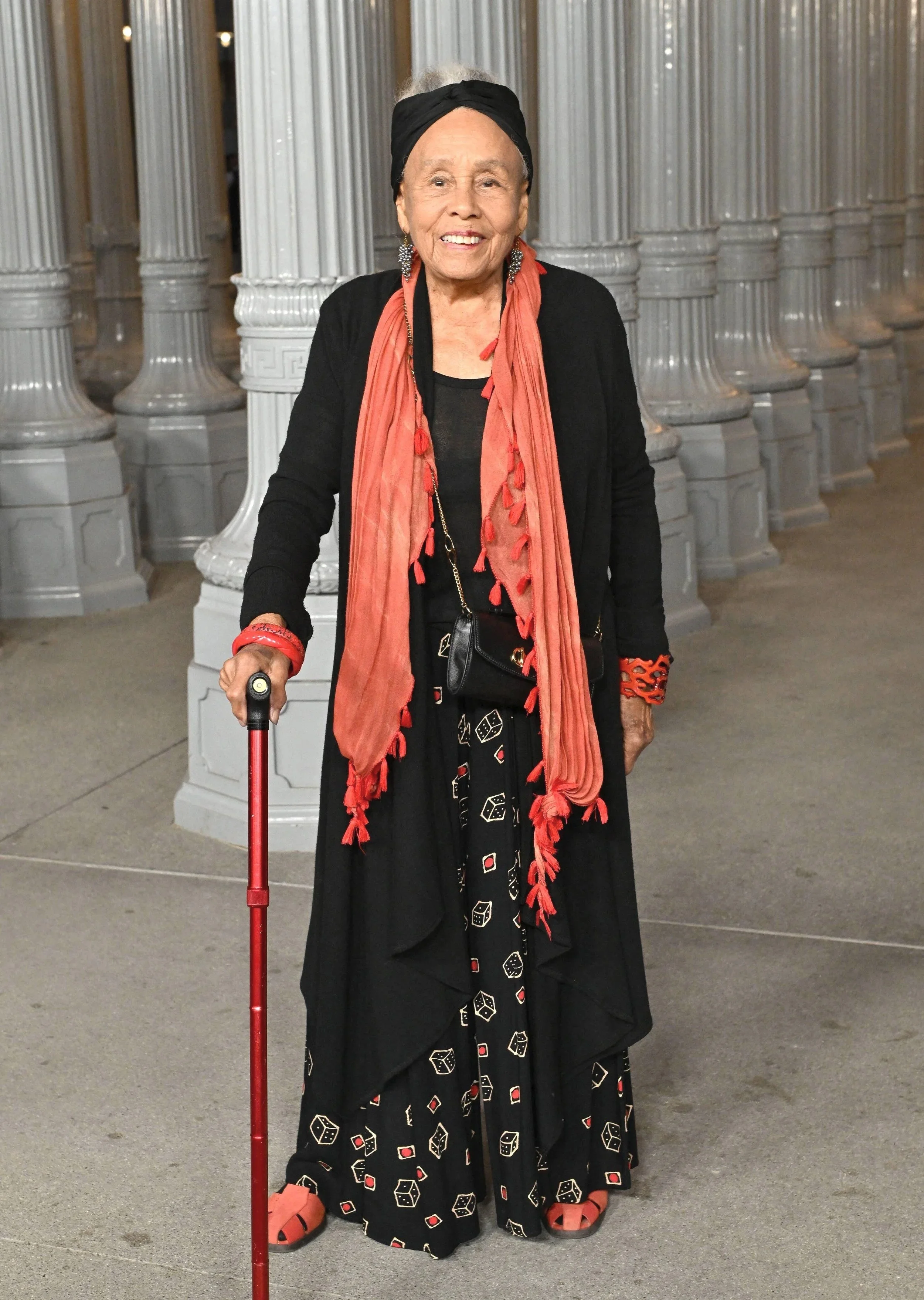
Betye Saar via Alamy
Artist Betye Saar passed at the age of 99 on Sunday, July 26th, 2026 — just four days shy of her 100th birthday on July 30th. As a central figure of the Black Arts Movement, the artist transformed racist memorabilia into powerful symbols of resistance.
The art world lost its reigning queen of Assemblage Art, but Saar left us her profoundly-creative and historical commentary on Black Life in America — to inform us but also to inspire us to carry on her mission.
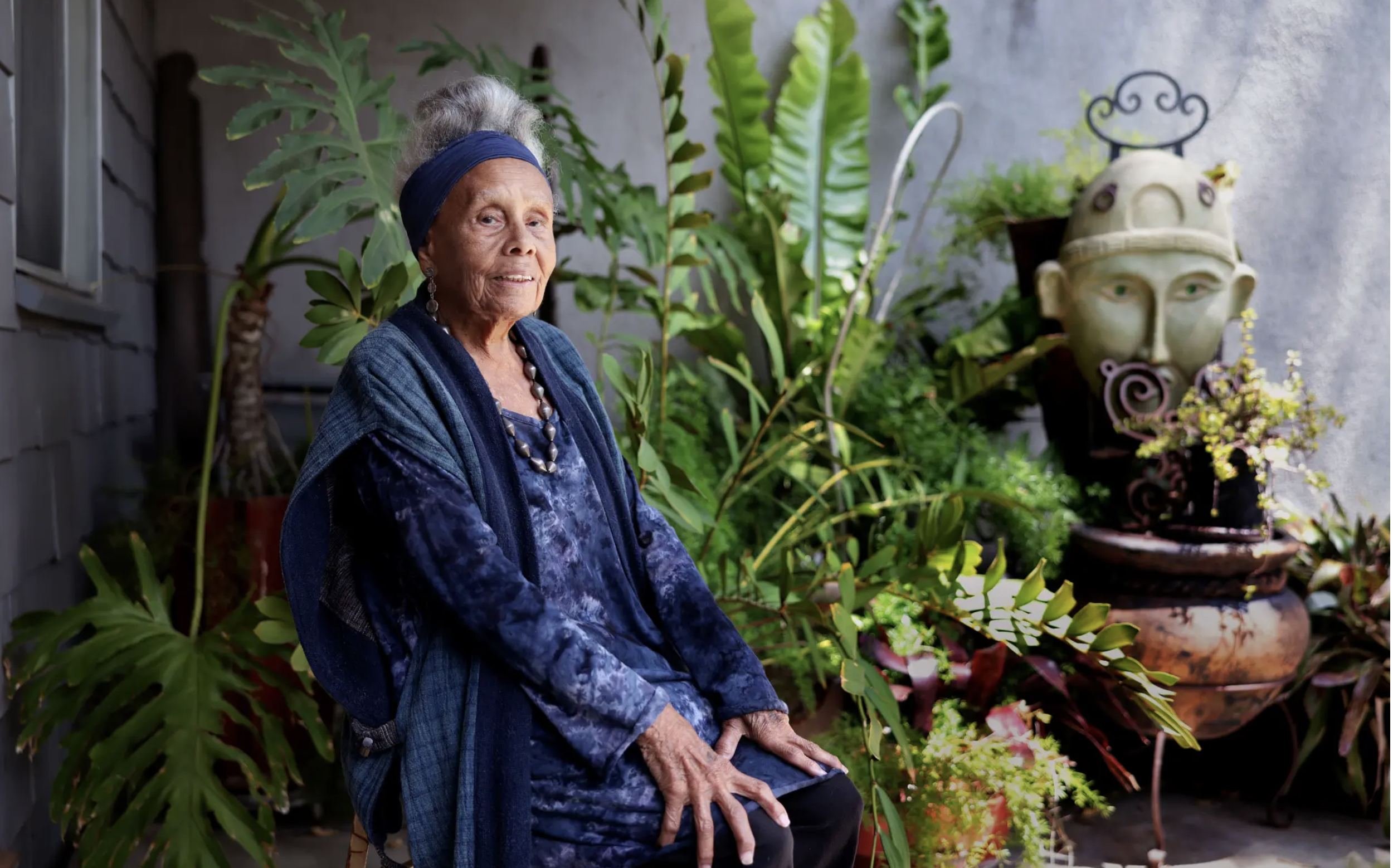
Betye Sayre by Christina House for Los-Angeles Times July 2026
As the artist’s 100th birthday approached, the Los Angeles Times interviewed her for a story that ran on July 15, 2026. Visiting Saar at her home studio in Laurel Canyon, where she’s lived in since 1962, writer Tara Anne Dalbow detailed the artist’s homage to human history:
Saar’s studio is packed with relics gathered from sidewalks and swap meets in L.A., and from trips to Marrakesh, Mexico, Nigeria, Haiti and Brazil. Antique globes are mixed with model boats, window panes, wooden masks and painted watermelons. Mercantile scales and rusted bird cages are scattered across crowded shelves. Neatly labeled drawers hold hand fans, plastic snakes, buttons, buckles.
It can be difficult to distinguish where an arrangement ends and an assemblage begins. Materials, like symbols, are recycled across sculptures and tableaux in an inexhaustible loop.
Betye Saar: Drifting Toward Twilight
To honor Betye Saar, AOC shares this beautiful 20-minute video of the artist in her studio—a space where discarded fragments of history were alchemy-spun into defiant, cultural gold. Saar takes us deep into her creative process and activist life, but we also experience the philosophical ‘voice’ that Saar intended us to hear emanating from her assemblage art piece.
A Landmark Artwork: ‘Liberation of Aunt Jemima, 1972’
Watching the video ‘Betye Saar: Drifting Toward Twilight’, we learn that the shadow box below titled ‘Liberation of Aunt Jemima, 1972’ was Saar’s first artistic assemblage offering.
Protest piece: Saar explicitly designated the work as her very first political protest, born out of rage and helplessness after the 1968 assassination of Martin Luther King Jr.
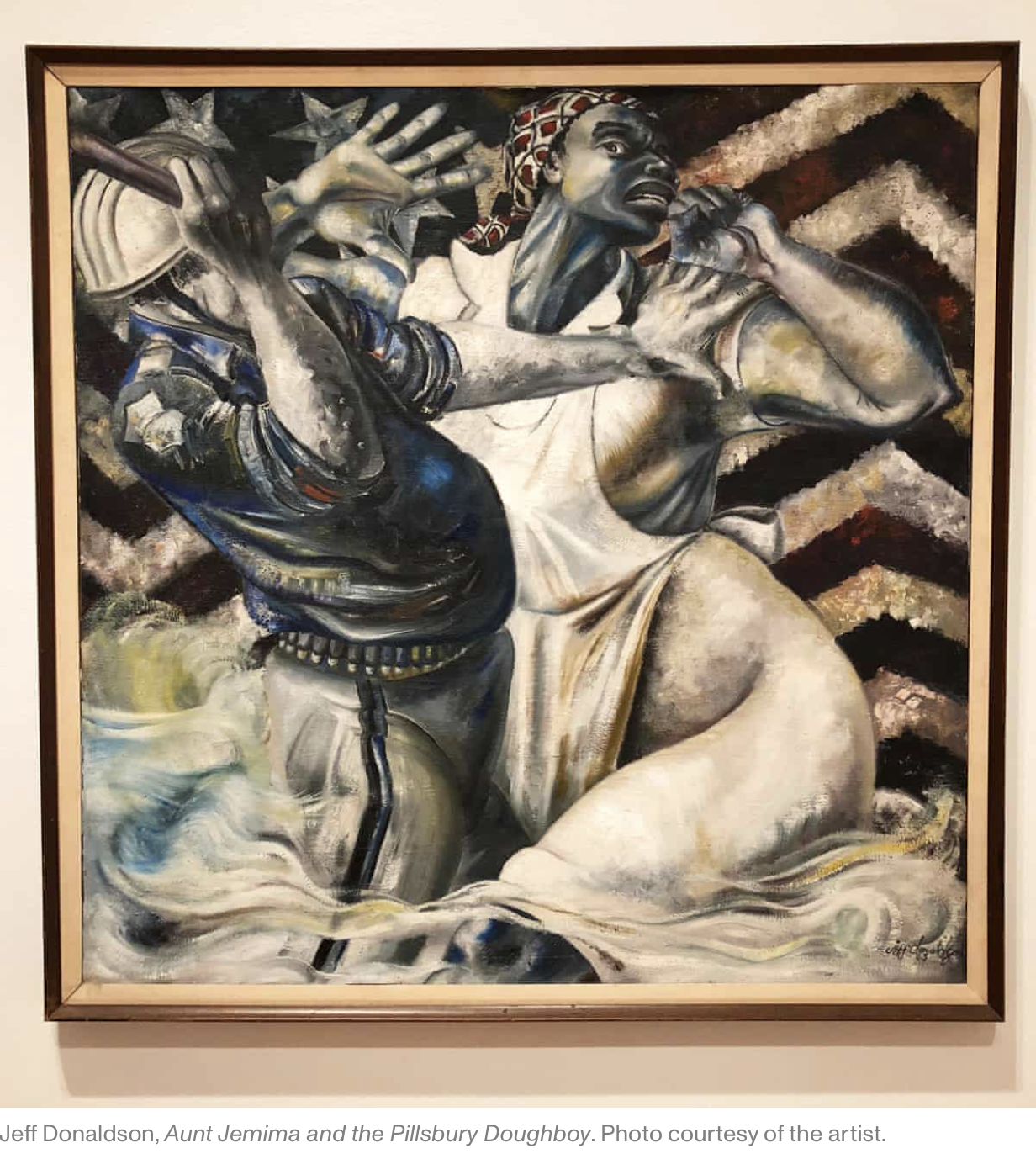
Female warrior figure: She described turning the subservient image into a militant fighter for Black liberation and women's rights.
Symbols of empowerment: Saar referred to the inserted rifle and hand grenade not as an endorsement of actual violence, but as attention-getting tools of personal power.
True light / Transplant: The artist later reflected that she saw Aunt Jemima in her “true light” as a “transplanted African Queen, a survivor, a nurturer, a free spirit, a warrior.”
The historical exhibition ‘Los Angeles 1955-1985: Birth of an Art Capital’ took place at the Centre Pompidou in Paris from March 8 through July 17, 2006.
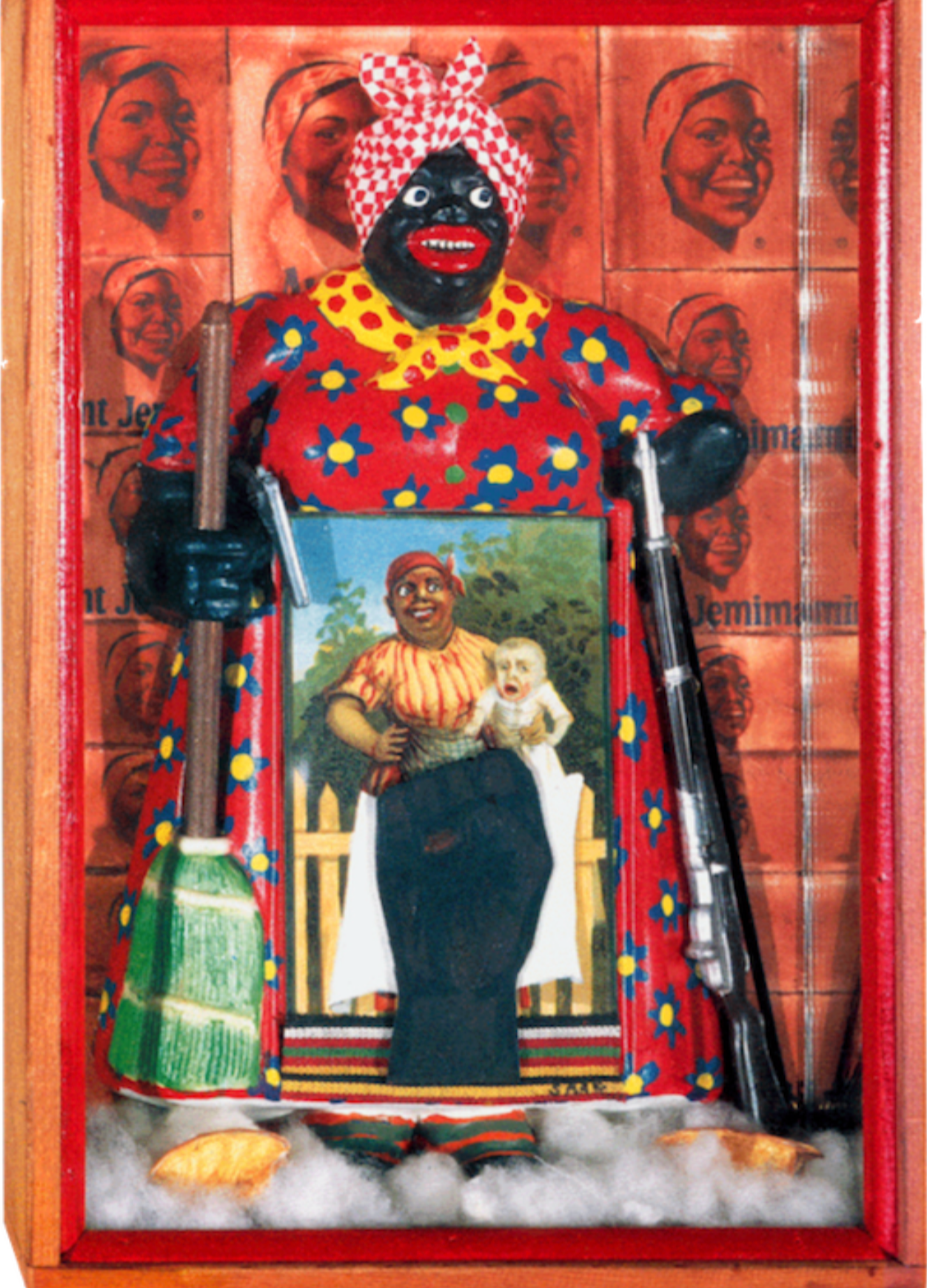
Betye Saar, Liberation of Aunt Jemima, 1972, assemblage, 11-3/4 x 8 x 2-3/4 inches (Berkeley Art Museum and Pacific Film Archive)
From Prada to New Humanism
My first deep dive into Saar’s work was covering her 2016-2017 exhibition sponsored by Prada in Milan—the first time her ‘Black Life’ work was shown in Italy. Hosted at Fondazione Prada in Milan from September 15, 2016 to January 8, 2017, ‘The Liberation of Aunt Jemima, 1972 ‘ was one of 80 works in the show, and the one always most in demand, according to curators and gallery-owners.
Looking back at my original article, a key word blinked loudly from the text. I described Betye Saar as a "humanist." Today I call the high-impact artist a New Humanist, a distinction based on an intense period in recent years of wanting to make sense of my beliefs in a coherent structure or philosophy for Anne.
The video is an overview of the exhibition.
New Humanism vs Old Humanism
Humanism failed the world in its original Eurocentric, patriarchal and largely racist form. We can celebrate humanism’s achievements and fundamental role in creating America’s alleged political democracy, while also acknowledging its failures.
Anne of Carversville embraces reconsidered New Humanism principles, ones that live up to the original, 1000 year-old goals and enlightened purpose of humanism as originally defined but not delivered.
Our Six Degrees of Separation Lives
The six degrees of separation theory states that any two people on Earth are connected by a maximum of six social connections or intermediaries. This means a chain of "friend of a friend" or “business colleague of a friend” links can connect any individual to anyone else globally in six steps or fewer.
My intersections with Betye Sarr’s art — especially her ‘Liberation of Aunt Jemima, 1972’ assemblage artist debut —- live up to the six degrees theory.
Up Close and Personal: Aunt Jemima for Real
Over the course of AOC’s writing on the topic of Aunt Jemima, I want to express my awareness that many Black women have deep and understandable resentments about her role as a ‘Happy Mammy’ Jim Crow archetype in American culture.
This reality explains Betye Saar’s reframing of Aunt Jemima from a friendly and familiar ‘happy mammy’ archetype to a militant, Black power figure. Saar unleashed her true self as also a symbol of Black political power and militancy through her assemblage art.
I have long argued that large numbers of white people remain deeply unsettled over the idea of Black militancy. They can say whatever they wish about people of color, but they, too, have ancestral memory. Among those who truly do believe in an afterlife in heaven, a substantial number feel guilt about our violent, collective past and the narrative that white men themselves created to justify their so-called ‘divine mission’ to save the Africans.
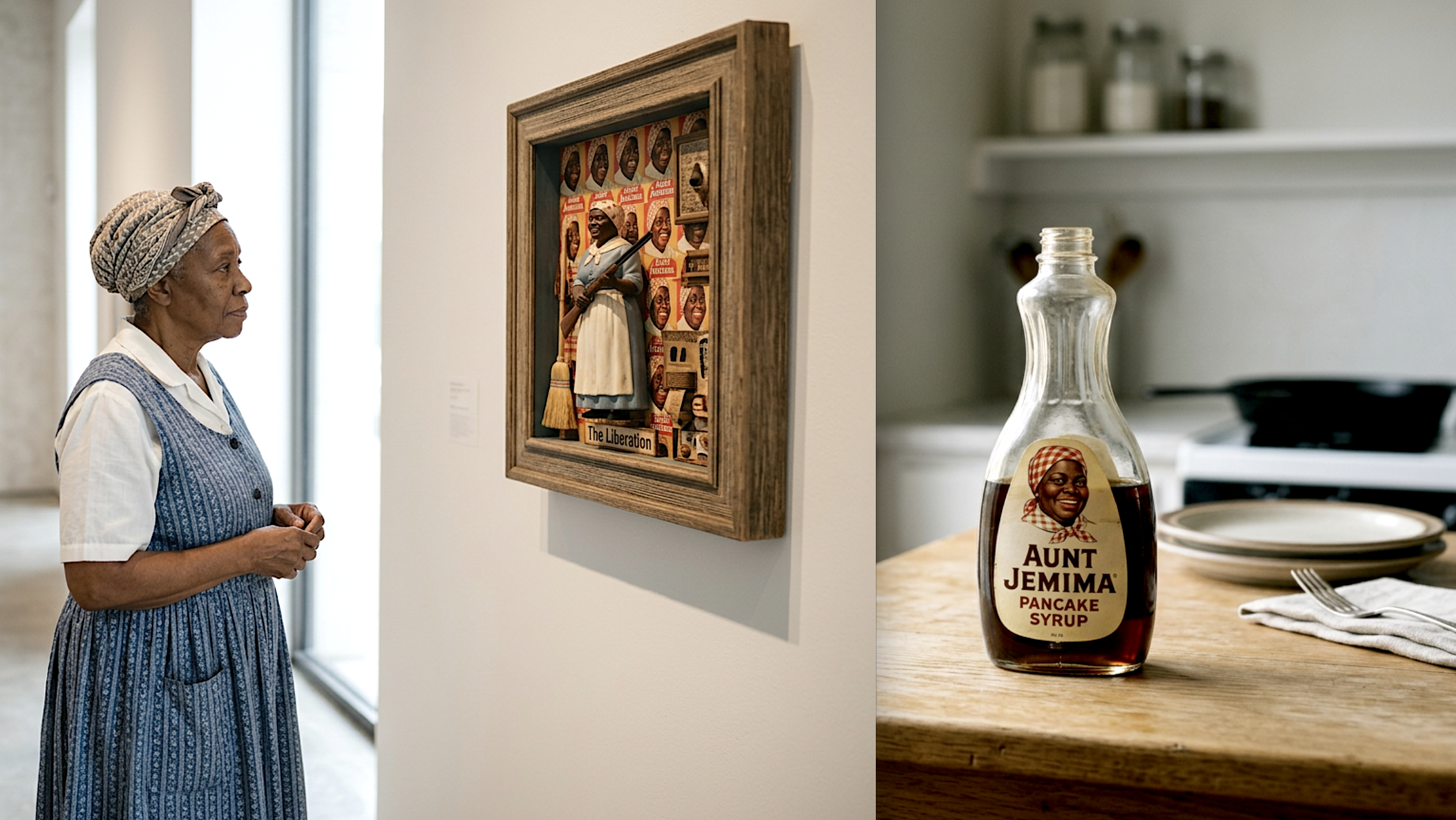
Inspired by Betye Saar, Anne Used AI To Make a Simple but Thoughtful Visual.
For Many Children Growing Up in America, Aunt Jemima Was Their First Exposure to Black Life
AOC knows of no research that connects young children’s impressions of Aunt Jemima with their later adult lives and racial attitudes. For many young Americans, especially those born in the post-war, late 1940s-early 1950s baby boom years, Aunt Jemima was the first person of color they experienced live, especially in the Midwest states of America.
I’m not talking about kids seeing Aunt Jemima’s picture on mom’s box of pancake mix, sitting on the kitchen counter. I’m talking about being in the presence of Aunt Jemima herself. As ‘awful’ as the experience of learning that one’s own grandmother was an Aunt Jemima has been for some American families, some white people viewed these women as near celebrities. Not all of these people were stone-cold racists, because one of those people was me.
It’s remarkable that in the earliest post-WWII years of a burgeoning civil rights movement, the 1949 publication of Simone de Beauvoir’s ‘The Second Sex’ followed by Betty Friedan’s 1963 ‘The Feminine Mystique’, a small group of Black women traveled America doing pancake demonstrations at county fairs, rotary breakfasts, grocery stores and other events promoting the Aunt Jemima franchise. The story was largely about pancakes and syrup.
There were rules that Quaker Oats insisted upon for their Aunt Jemima crew. Like the clown mascot, Ronald McDonald for the global fast food giant, the women were required to dress in costume and not allowed to change in the bathroom before their work assignment.
More than one granddaughter has reflected that — besides the humiliation of traveling in costume as a southern mammy — the women were instructed to speak in a folksy, pigeon-English style. Many Aunt Jemimas refused that speaking request.
In this video, Jeff Wiggins breaks down the story of the original Aunt Jemima Nancy Green, through the lens of a post-2020-George Floyd murder world.
In my own case, my Aunt Jemima did not appear only once in my young girl’s life. My memories and age range when I lived in Lake Benton, Minn. estimate three occasions. She did not come to my town every year.
My Aunt Jemima: Six Degrees of Separation in Action
The descendants of America’s Aunt Jemima actors are very clear that their own educations and subsequent professional careers were positively uplifted by their grandmothers’ time spent on the road acting out the role of a pancake flipping female mammy. Even though they felt anguish and resentment that their Black women kin acted out the role of Aunt Jemima, they have always known that she was doing the job for them — her investment in the family’s future.
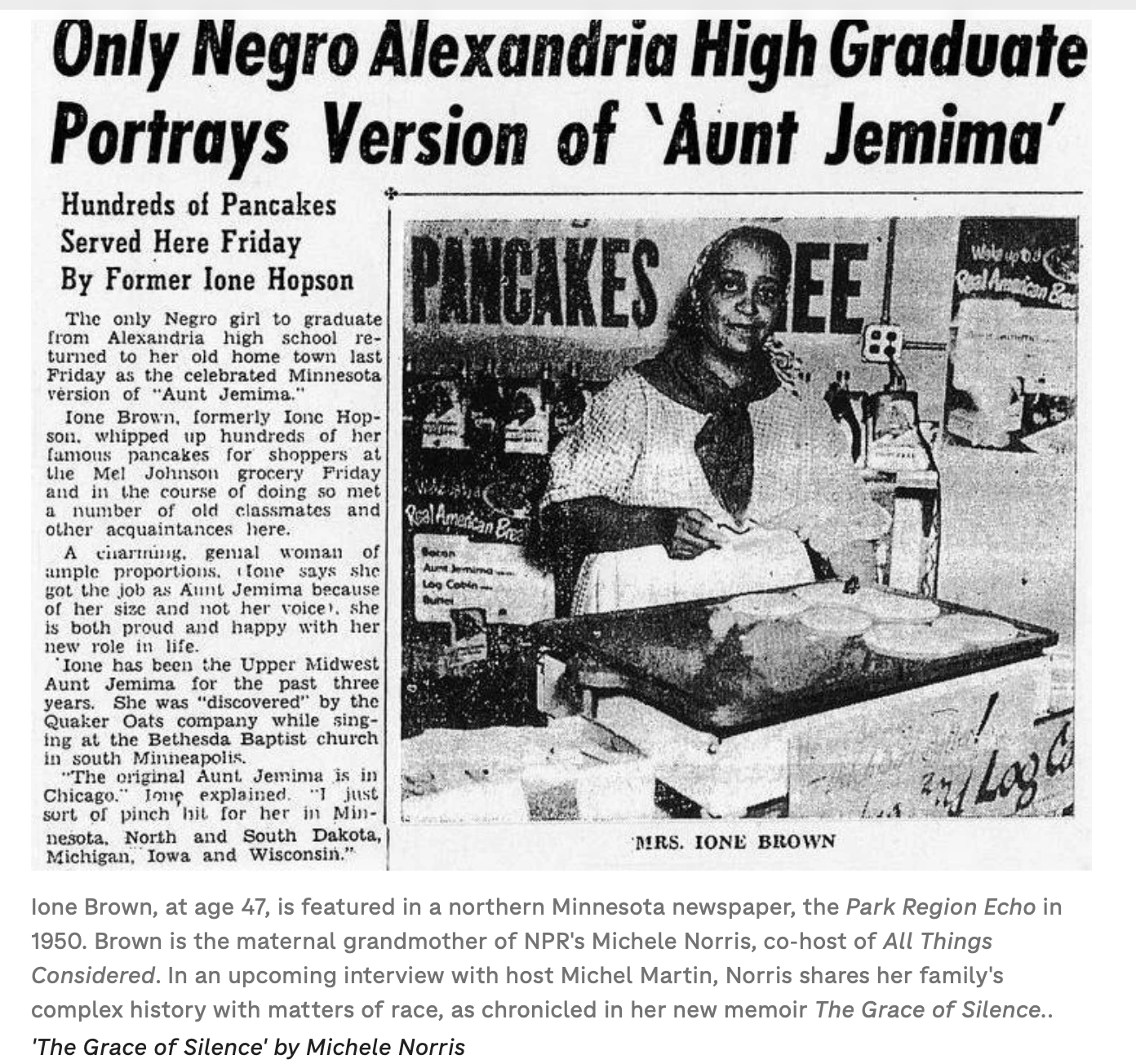
One of America’s foremost journalists, Michele Norris, learned after the death of her beloved grandmother Ione Hopson Brown, born and raised in Minnesota, that she worked as a traveling Aunt Jemima.
Norris herself grew up in Minneapolis and graduated with a degree in journalism from the University of Minnesota. She is best known for serving as a host of NPR's ‘All Things Considered’ from 2002 to 2012, making history as the first African American female host of the program. She spent a decade prior working for ABC News in the Washington Bureau, covering politics and social change.
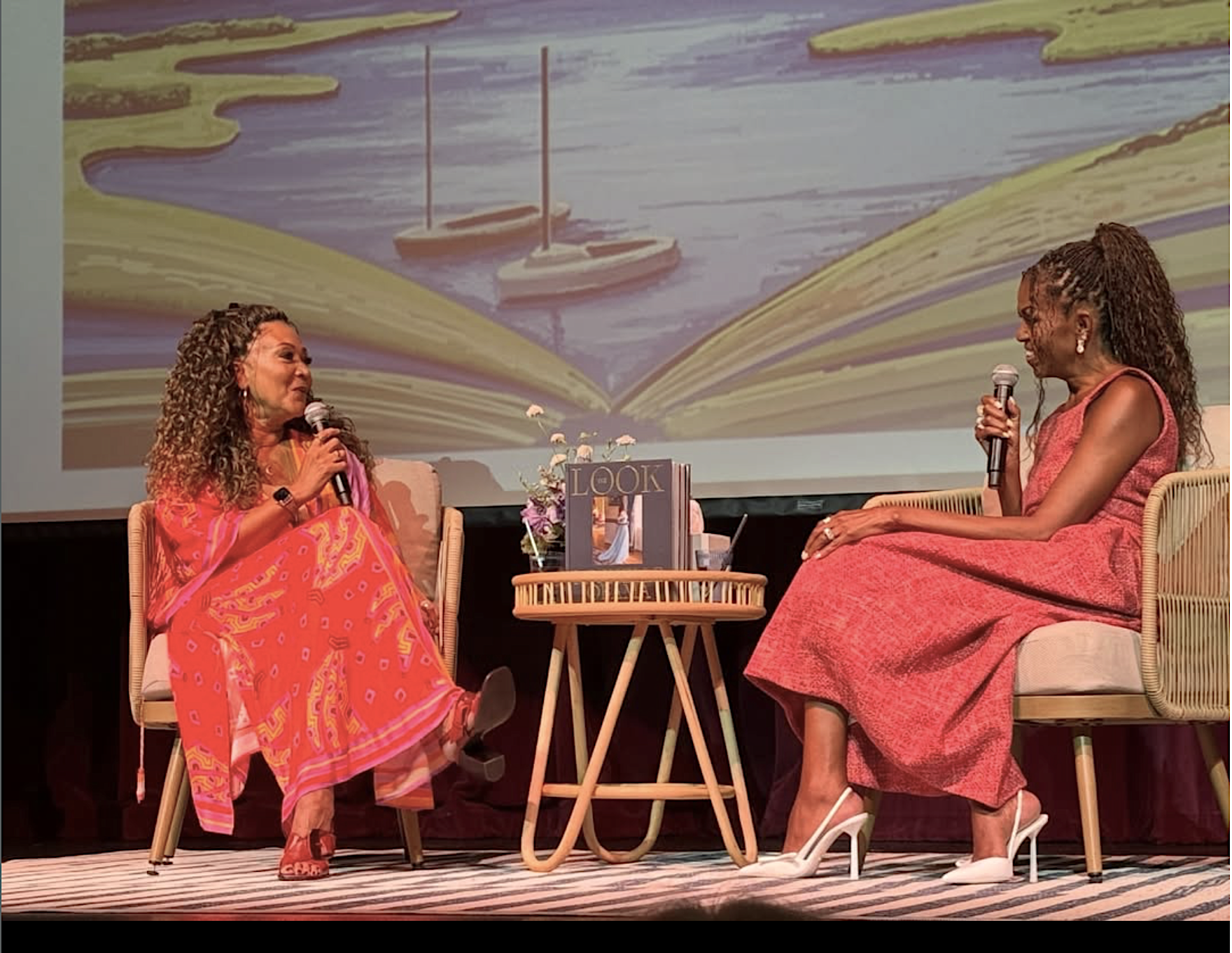
Michele Norris and Michelle Obama at the Martha’s Vineyard Book Festival, August 24, 2026. Via Michelle Norris IG.
Today Michele Norris is a senior contributing editor for MS NOW, most recently anchoring the opening of The Obama Presidential Center Museum in Chicago for the network. You can learn much more about Michele Norris’ current projects on her IG. The image above of the ladies in red — Michele Norris and Michelle Obama — comes from an August 24 interview of America’s famous First Lady speaking of her book ‘The Look’ at the Martha’s Vineyard Book Festival.
We depart this soothing moment and dial back to an America in turmoil, six years ago. [Not that America isn’t in a different but equally time of turmoil now.]
In the weeks and months after the May, 2020 murder of George Floyd, the granddaughter [Michele Norris] of Ione Hopson Brown wrote on numerous websites including The Washington Post, the details of Ione Brown’s experiences as an Aunt Jemima. This is where our paths crossed in spectacular fashion. Norris wrote:
So they knew that when they were going into these small towns - my grandmother had a six-state region that included Iowa, the Dakotas, Michigan, Wisconsin and Minnesota. And when they would go into these towns, they knew that in many cases, they were going into small towns where people had not seen Black women before. . . I found recordings and examples of news coverage when she had go into these towns. And she talked to reporters. And she'd explain that she would sing gospel songs when she was serving these pancakes because she wanted people to know that she was a woman of God, that she would focus on young children. And she would recite poetry.
I simply could not believe what I was reading. Given the volume of all the protests and angry words consuming America in the summer of 2020, it’s impossible to believe that I wasn’t weeping. However, I was under an eye doctor’s instructions to stop crying, because I developed one heck of an eye infection that May from shedding so many tears.
Michele Norris’ Grandmother was My Beloved Aunt Jemima
For me beginning at age four and forward until age 10-12, I adored this woman. My uncle was the head butcher at our small town grocery store. When Aunt Jemima was in town, I got the call and headed down to a meetup with her.
I was just as excited to see her again as when — many decades later — I was headed to Paris, France or Shenzhen, China. “Implausible, you say?” You are wrong, as I absolutely adored this woman Ione Hopson Brown.
It’s a fact that I was always leaving home as a child, and it drove my mother crazy. She knew she was the reason I was hell-bent on finding some peace in my life, away from her.
Our family reality did not inspire her to change her mothering approach, even though at least one family intervention had occurred when I was only a few months old, according to my Aunt Naomi.
I can imagine my mother was ready to strangle me when at age six, I would have been headed up the hill to race right back down to the grocery store, where my heavenly Aunt Jemima was waiting for me.
I admired her as a woman driving herself around America with so much independence. I was awestruck over that fact — and was too young initially to understand the racial aspect of her being a negative stereotype or the subject of racial discrimination by white folks.
Anne’s Young Girl, No-Limits Love for Aunt Jemima
I loved Aunt Jemima because she was very confident and self-aware. I could not imagine her being abusive to young children because she was so welcoming and friendly to me, and she remembered me, too. That means she towered over my own mother in any positive embrace of me. I fancied myself as Aunt Jemima’s assistant and whatever she needed, it was my absolute honor to get it for her.
Did she need a fresh, new cleanup rag after her cooking? I was on it. Did she want it dry or watered up? Just tell me. Did she want hot water or cold water? Her wish was my command. I was a bit bossy as a child, and I was probably guilty of telling the guys backstage to “step on it” in getting me what I needed for my Aunt Jemima.
I do not recall Ione Brown singing or her voice as described by her granddaughter Michelle Norris, as being crisp and very precise. And I don’t believe I was so bold as to ask her if she could pick me up some weekend, and I’d go with her. How about Sioux Falls, South Dakota? Was that on her route? I had cousins there.
Even my conservative grandmother Marie thought my fervor for ‘Aunt Jemima’ was understandable, given our family situation. My cousins have told me more than once that my grandmother was very conservative, except when it came to her oldest granddaughter, five days younger than my cousin Steve. “You got away with absolute murder,” they said. “Marching in anti-war protests in New York City? No problem. Embracing all that Gloria Steinem feminism rhetoric. You were in New York, so of course you embraced all that feminism picking away at men all the time. To say you could do no wrong is a total understatement — and we got sick of hearing about it. No offense, dear cousin.”
In one of the most serious examples of her favoritism, Marie was the local librarian and our town library was a very tall, two-story climb up a stairway over the fire department downstairs. The left-hand wall was my canvas.
My grandmother was lovely to everyone, but she did not use that wall for all Lake Benton’s children. That wall was her granddaughter’s art gallery for her stories, her drawings, how about watercolors! My imagination was in overdrive.I would run up and down the hill for a new delivery of artwork or stories, before going to confession on Saturday afternoon.
In retrospect, my privileges were excessive, and the wall should have been for all the kids. Perhaps we opened it to everyone for the month of June. I tell you this story because there is no doubt that I wrote all the details of my days with Aunt Jemima, for the whole town to read. Being so young in the beginning of our friendship, it never occurred to me that my celebration of Miss Brown might not have equal appeal to everyone reading my stories about her.
I just checked the dates, and it seems highly likely that there was a Polaroid of the two of us posted on that wall, too. . . with first-class, award-winning ribbons for my actor friend.
Racism Thriving in My Own House
My mother was a deeply racist person, but I didn’t learn that until age 15. She died never knowing that I overheard her tirade with the builder of our house. Her fury was focused on what she would do if he actually sold the house across the street to a Black, very-established in Mankato veterinarian. I stood in the hallway, not believing this was my own mother unleashing the most racist tirade imaginable against a very successful Black man with a major following in our community. People are very particular about who treats their family pets and this man was a significant success story decades ago.
I’ve never forgiven myself for telling her the story and how great it was that we would have a new neighbor. I can’t remember if the vet, who got prescriptions filled in the evening, next to the cosmetic department in which I was working after school, discussed the house falling through. If we did talk about it, I would have begged his forgiveness and apologized profusely. I had no idea that my own mother was capable of treating a stranger this way; and this guilt has lived with me my entire life.
Our relationship was absolutely fractured permanently — meaning most of my life. She made every effort to humiliate me in front of others over my “love for the Negroes” were her exact words. Can you imagine such vile language coming from the mouth of Miss Brown about white people? I doubt it, although she certainly would have been justified in cursing a blue streak, as my mother did about ‘her kind’ — meaning Miss Brown’s people of color.
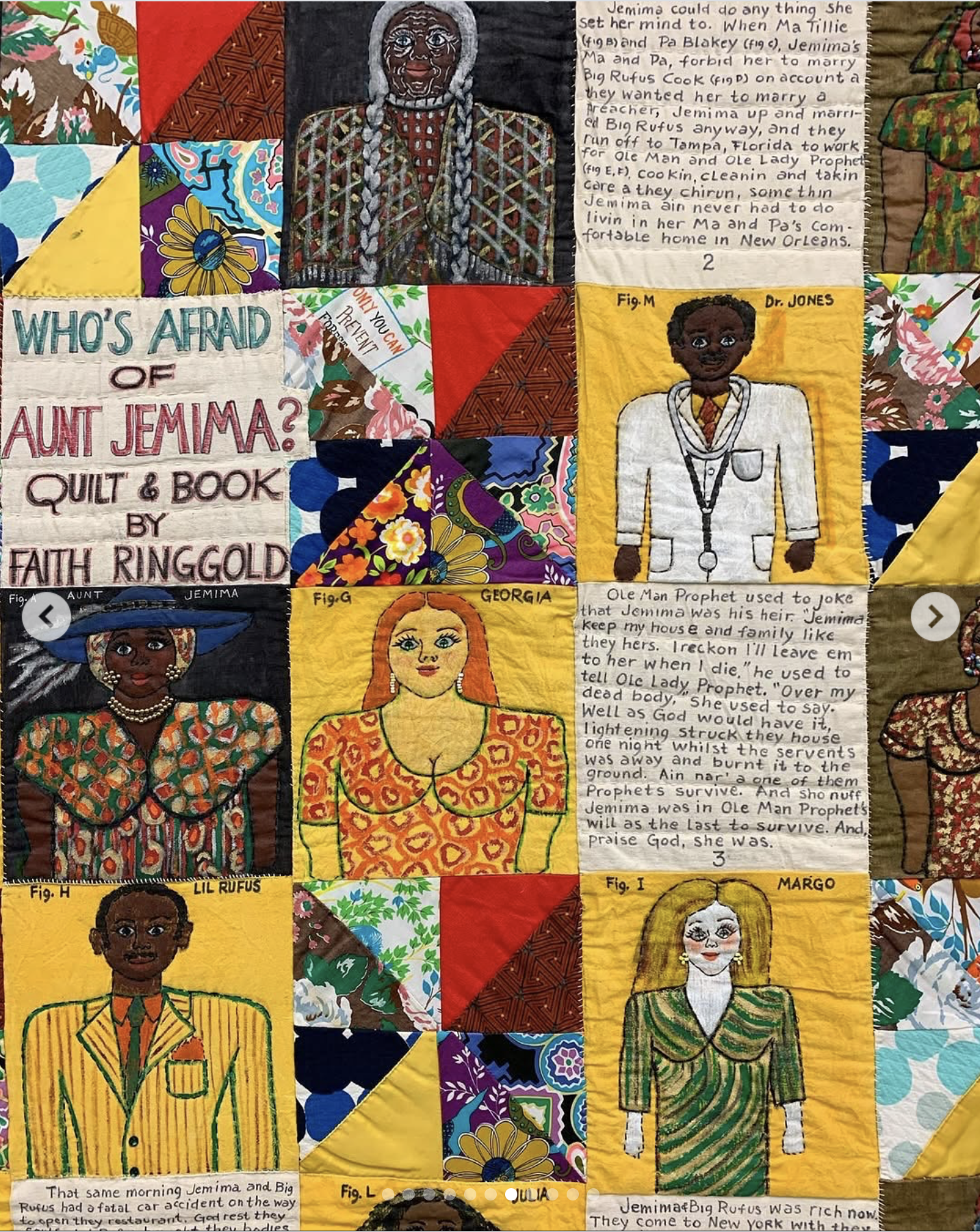
“I became a feminist because I wanted to help my daughters, other women and myself aspire to something more than a place behind a good man.” 💬 Faith Ringgold“I became a feminist because I wanted to help my daughters, other women and myself aspire to something more than a place behind a good man.” 💬 Faith Ringgold
“I became a feminist because I wanted to help my daughters, other women and myself aspire to something more than a place behind a good man.” Faith Ringgold, artist
Miss Brown Was Off Limits
I can say that my mother never discussed my unusual adoration of Miss Brown, probably because she knew she would get an earful from my grandmother and Aunt Mavis, who were my protectors. Most often, they metaphorically picked me up off the floor and another beating, to put me back together again with love glue.
It seems reasonable that my mother would have been impacted by their forceful defenses of me. But they could not mellow her regarding her hatred for her daughter and the nearly constant verbal and physical abuse she heaped on me.
All I can say is that if you gave me a sheet of paper at age 8 and asked me to write down 20 words to describe Ione Hopson Brown as Aunt Jemima, every adjective would have been a superlative or a really nice one like ‘kind’ or ‘super friendly’ or ‘warm’. I would have used every adjective in my vocab to describe what I wished my mother to be.
Miss Brown was a big wow to this small town girl and that impression never changed. It only deepened when she came roaring back into my consciousness in 2020.
The summer of 2020 was enormously complicated for millions of Americans, as we headed into the fall elections. That young girl who used to get tears in her eyes singing ‘America the Beautiful’ and hanging out with Aunt Jemima was so distraught that she decided to move to Virginia, the former capitol of the Confederacy.
My cousin Jo and I visited Charlottesville after the march of white nationalists in 2017. I had long studied the growth of white nationalism in America and very much saw my beloved country in great peril. When all hell broke lose in in 2020, major moments of my life — from childhood to adulthood — came into focus.
Virginia needed me in a way that New York City or Philadelphia did not. While I want to contribute to the healing of America, it may not be possible. My mother is to Trump’s MAGA as Miss Brown is to my own politics. Neither of us would yield to the other. And no, we couldn’t learn to get along, because my mother was incapable — or refused — to keep her damn mouth shut.
By contrast, I do have a significant level of self-control and tried so very hard to keep quiet and just let her rage.
It made me sad for Michelle Norris learning about her grandmother being an Aunt Jemima. But there’s beauty there, too, in knowing how inspired I was by her beloved grandmother Ione Hopson Brown. To me she was an absolute VIP.
I understand that most Black women would reject the sincerity of my memory — that a young white girl in Lake Benton was so mesmerized by the powerful figure of Aunt Jemima. We have much to learn about each other in this week, when Gloria Steinem has passed.
Imagine if for one minute, we tried not to second-guess each other or rewrite our individual stories. What if each of us could bury our own stereotypes, and instead believe in the expressed truths we share about ourselves, until our actions undermine our words.
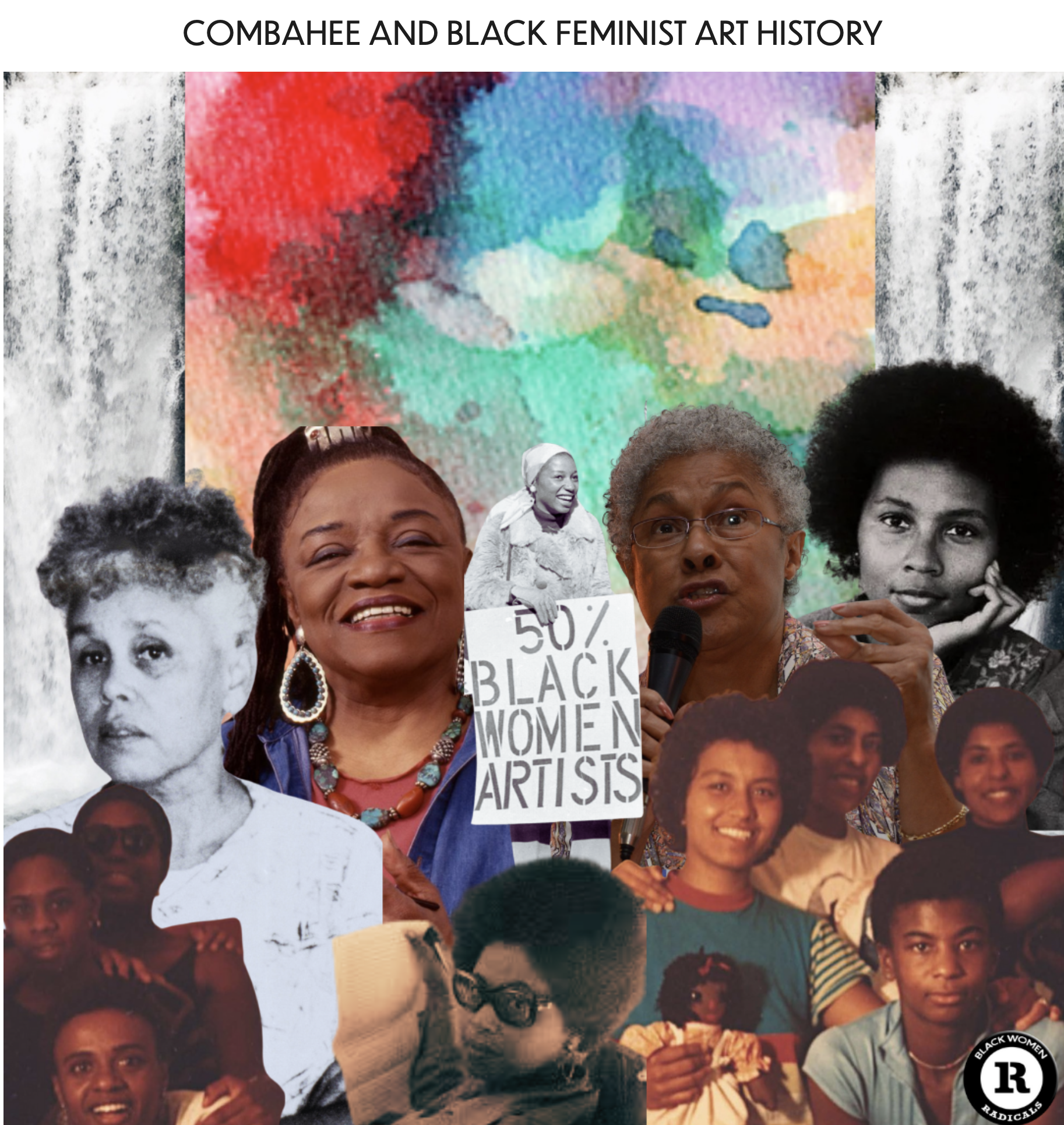
COLLAGE OF MEMBERS OF COMBAHEE: BETYE SAAR, FAITH RINGGOLD, PATRICIA FAITH COLLINS, SYLVIA WYNTER
Finishing these thoughts about Aunt Jemima took extra time this week. I kept feeling that I wasn’t being generous enough with information about Betye Saar and Aunt Jemima. Just today, I was able to reconcile my devotion to ‘my’ Aunt Jemima to my lifelong pursuit of racial justice.
When I read Betye Saar’s statement about how she came to regard Aunt Jemima, now reflecting on her as an older woman artist with lifelong knowledge around the fight for racial justice and how Aunt Jemima fit into the narrative, there was some redemption for my young-girl self. I looked at Ione Hopson Brown with exactly this reverence. Many decades older now, I’d say Saar nailed it when it comes to honoring Aunt Jemima! Amen.~ Anne
The artist [Saar] eventually saw Aunt Jemima in her “true light” as a “transplanted African Queen, a survivor, a nurturer, a free spirit, a warrior.”