Artist Betye Saar, the Aunt Jemima Revolution, and a New Humanism
/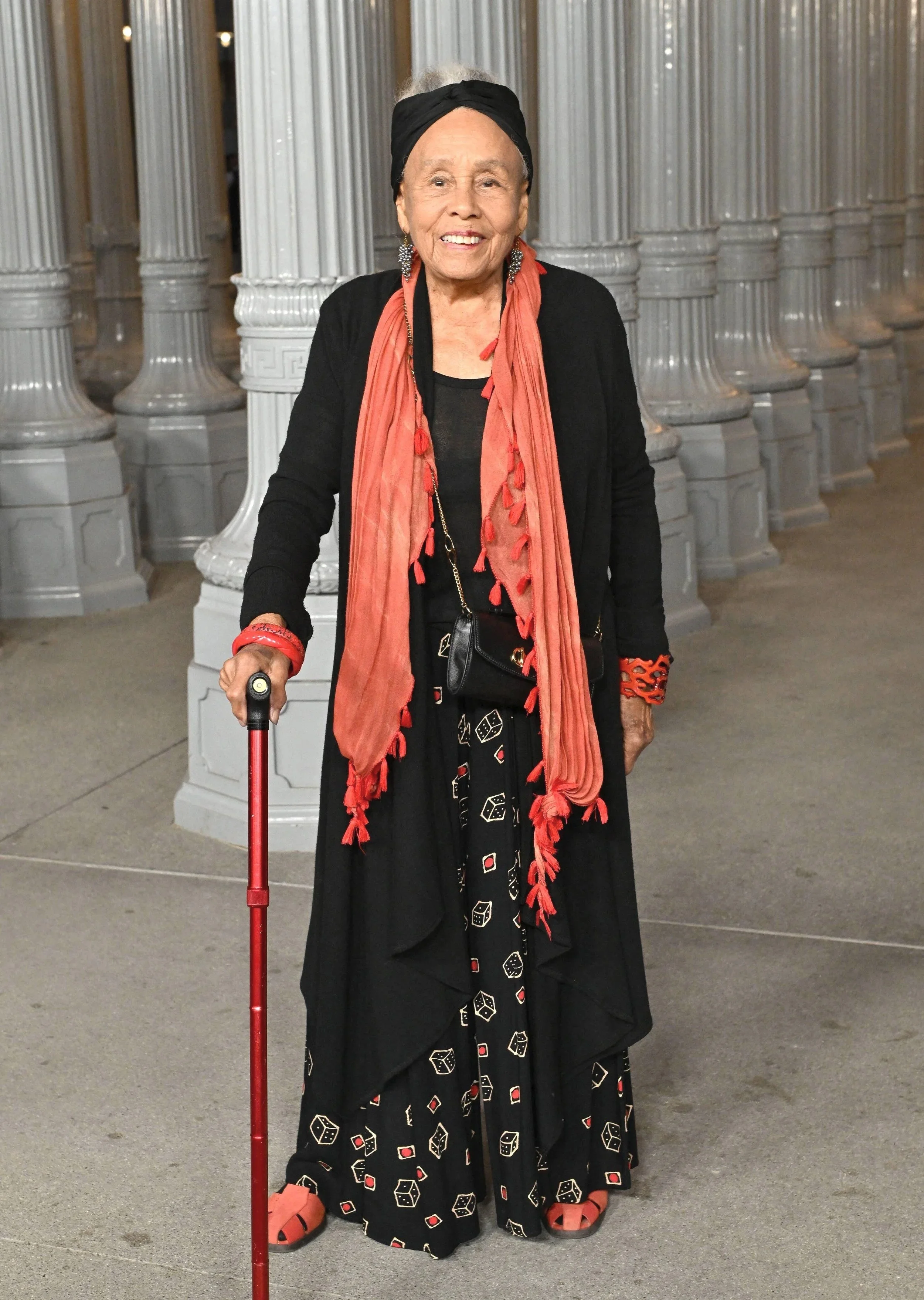
Betye Saar via Alamy
Artist Betye Saar passed at the age of 99 on Sunday, July 26th, 2026 — just four days shy of her 100th birthday on July 30th. As a central figure of the Black Arts Movement, the artist transformed racist memorabilia into powerful symbols of resistance.
The art world lost its reigning queen of Assemblage Art, but Saar left us her profoundly-creative and historical commentary on Black Life in America — to inform us but also to inspire us to carry on her mission.
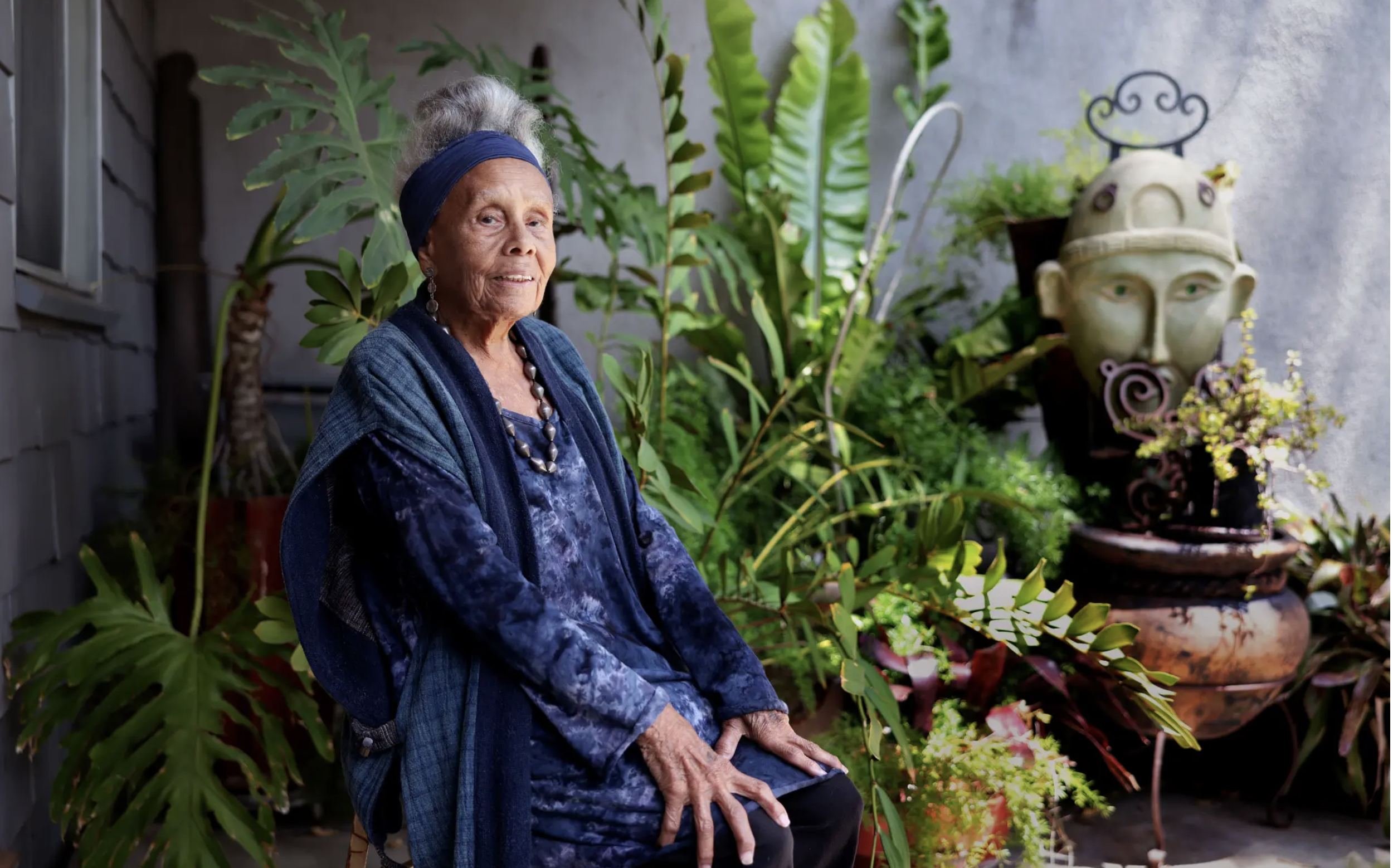
Betye Sayre by Christina House for Los-Angeles Times July 2026
As the artist’s 100th birthday approached, the Los Angeles Times interviewed her for a story that ran on July 15, 2026. Visiting Saar at her home studio in Laurel Canyon, where she’s lived in since 1962, writer Tara Anne Dalbow detailed the artist’s homage to human history:
Saar’s studio is packed with relics gathered from sidewalks and swap meets in L.A., and from trips to Marrakesh, Mexico, Nigeria, Haiti and Brazil. Antique globes are mixed with model boats, window panes, wooden masks and painted watermelons. Mercantile scales and rusted bird cages are scattered across crowded shelves. Neatly labeled drawers hold hand fans, plastic snakes, buttons, buckles.
It can be difficult to distinguish where an arrangement ends and an assemblage begins. Materials, like symbols, are recycled across sculptures and tableaux in an inexhaustible loop.
Betye Saar: Drifting Toward Twilight
To honor Betye Saar, AOC shares this beautiful 20-minute video of the artist in her studio—a space where discarded fragments of history were alchemy-spun into defiant, cultural gold. Saar takes us deep into her creative process and activist life, but we also experience the philosophical ‘voice’ that Saar intended us to hear emanating from her assemblage art piece.
A Landmark Artwork: ‘Liberation of Aunt Jemima, 1972’
Watching the video ‘Betye Saar: Drifting Toward Twilight’, we learn that the shadow box below titled ‘Liberation of Aunt Jemima, 1972’ was Saar’s first artistic assemblage offering.
Protest piece: Saar explicitly designated the work as her very first political protest, born out of rage and helplessness after the 1968 assassination of Martin Luther King Jr.
Female warrior figure: She described turning the subservient image into a militant fighter for Black liberation and women's rights.
Symbols of empowerment: Saar referred to the inserted rifle and hand grenade not as an endorsement of actual violence, but as attention-getting tools of personal power.
True light / Transplant: The artist later reflected that she saw Aunt Jemima in her “true light” as a “transplanted African Queen, a survivor, a nurturer, a free spirit, a warrior.”
The historical exhibition ‘Los Angeles 1955-1985: Birth of an Art Capital’ took place at the Centre Pompidou in Paris from March 8 through July 17, 2006.
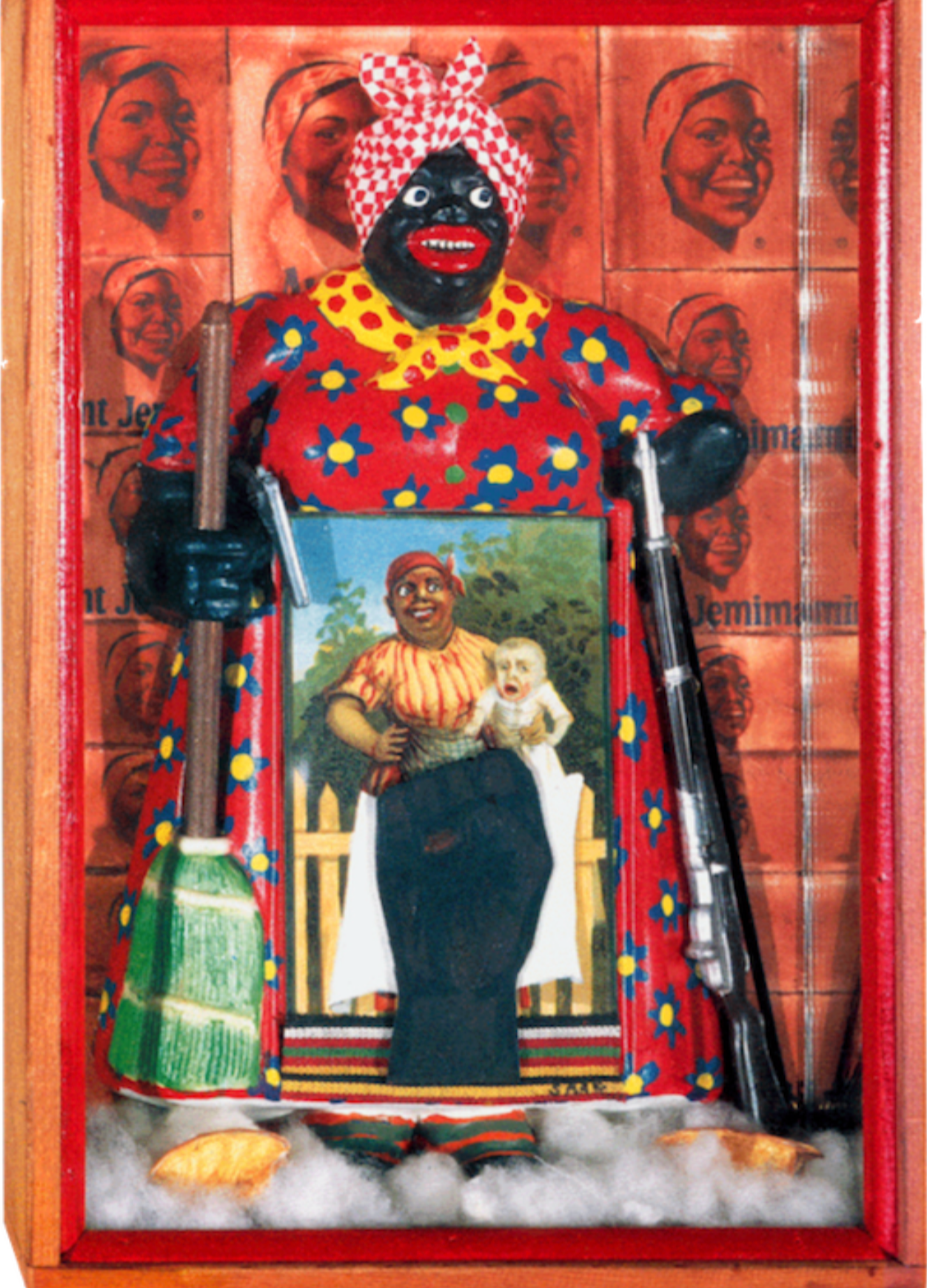
Betye Saar, Liberation of Aunt Jemima, 1972, assemblage, 11-3/4 x 8 x 2-3/4 inches (Berkeley Art Museum and Pacific Film Archive)
From Prada to New Humanism
My first deep dive into Saar’s work was covering her 2016-2017 exhibition sponsored by Prada in Milan—the first time her ‘Black Life’ work was shown in Italy. Hosted at Fondazione Prada in Milan from September 15, 2016 to January 8, 2017, ‘The Liberation of Aunt Jemima, 1972 ‘ was one of 80 works in the show, and the one always most in demand, according to curators and gallery-owners.
Looking back at my original article, a key word blinked loudly from the text. I described Betye Saar as a "humanist." Today I call the high-impact artist a New Humanist, a distinction based on an intense period in recent years of wanting to make sense of my beliefs in a coherent structure or philosophy for Anne.
The video is an overview of the exhibition.
Humanism failed the world in its original Eurocentric, patriarchal and largely racist form. We can celebrate humanism’s achievements and fundamental role in creating America’s imperfect political democracy, while also acknowledging its failures.
Anne of Carversville embraces reconsidered New Humanism principles, ones that live up to the original, 1000 year-old goals and enlightened purpose of humanism — as originally defined but not delivered. This is the lens through which AOC considers the reality that Aunt Jemima as a character created to sell pancake mix and syrup is deeply embedded in the soul of this great nation.
The reality of corporate America’s business decisions impacting race relations in America is also not new. It took the May 2020 murder of George Floyd in Minneapolis, Minnesota — my home state — to bring this cauldron of pent-up emotion onto the front pages of American media across all 50 states. This frustration and rage had been building since 2017 and the ‘Unite the Right’ rally in Charlottesville, Va.
Betye Saar’s famous artwork ‘Liberation of Aunt Jemima, 1972’ became another symbol — a deeply personal symbol for the families of real-life Aunt Jemimas — of the degradation that has accompanied race relations and the advancement of people of color in America.
Returning to Aunt Jemima, more than one granddaughter of these pancake-flipping corporate mammies has reflected that — besides the humiliation of traveling in costume — the women were instructed to speak in a folksy, pigeon-English style. These conditions and 99 other unforgivable offenses boiled on America’s front stoves, discussed in the American kitchens of Aunt Jemima’s granddaughters, now women with their own children.
It’s very easy for oatmeal or cream of wheat left unattended to boil over, sending a mess of mush far and wide from the stove to the kitchen floor. It was an excellent metaphor for the situation corporate stockholders found themselves experiencing in the summer of 2020, as human stories blew up in most states relating to the place of Aunt Jemima in the American consciousness. It was a particularly painful discussion for people of color, who have tried for decades to put America’s race wars behind them.
Tangentially, breakfast took on a new meaning for select white people as well. That statement is self-referential.
The descendants of America’s Aunt Jemima actors are very clear that their own educations and subsequent professional careers were positively uplifted by their grandmothers’ time spent on the road acting out the role of a pancake flipping female mammy. Even though they felt anguish and resentment that their Black women kin acted out the role of Aunt Jemima, they have always known that she was doing the job for them — her investment in the family’s future.
In this video, Jeff Wiggins breaks down the story of the original Aunt Jemima Nancy Green, through the lens of a post-2020-George Floyd murder world.
The Michele Norris Discovery
One of America’s foremost journalists, Michele Norris, learned after the death of her beloved grandmother Ione Hopson Brown, ka Ione Brown, who was born and raised in Minnesota, that she worked as a traveling Aunt Jemima.
For this progressive journalist on the frontline of stories about race in America, the news was a gut punch.
Norris and the other descendants of America’s Aunt Jemima actors are very clear that their own educations and subsequent professional careers were positively uplifted by their grandmothers’ time spent on the road, acting out the role of a pancake-flipping female mammy. Even though they felt anguish and resentment that their Black women kin acted out the role of Aunt Jemima, they have always known that she was doing the job for them — her investment in the family’s future.
Michele Norris herself grew up in Minneapolis and graduated with a degree in journalism from the University of Minnesota. She is best known for serving as a host of NPR's ‘All Things Considered’ from 2002 to 2012, making history as the first African American female host of the program. She spent a decade prior working for ABC News in the Washington Bureau, covering politics and social change.

Michele Norris and Michelle Obama at the Martha’s Vineyard Book Festival, August 24, 2026. Via Michelle Norris IG.
Today Michele Norris is a senior contributing editor for MS NOW, most recently anchoring the opening of The Obama Presidential Center Museum in Chicago for the network. You can learn much more about Michele Norris’ current projects on her IG. The image above of the ladies in red — Michele Norris and Michelle Obama — comes from an August 24 interview of America’s famous First Lady speaking of her book ‘The Look’ at the Martha’s Vineyard Book Festival.
Norris and the other descendants of America’s Aunt Jemima actors are very clear that their own educations and subsequent professional careers were positively uplifted by their grandmothers’ time spent on the road, acting out the role of a pancake-flipping female mammy. Even though they felt anguish and resentment that their Black women kin acted out the role of Aunt Jemima, they have always known that she was doing the job for them — as her investment in the family’s future.
We depart this beautiful moment of Michele and Michelle in Martha’s Vineyard in the summer of 2026 and dial back six years. I pause the story here, now flipping to a story about my own young-girl life in Minnesota and a six degrees of separation story that is quite breathtaking.
A significant degree of controversy has accompanied me through much of my life. I regard most of it as a badge of honor and have no regrets over the key decisions I’ve made over the decades. Still, there are moments when reality becomes difficult to process and the summer of 2020 was one of those moments.
More tears flowed from my eyes in the summer of 2020 than ever in my life. For starters, I’d never watched a man being murdered on live television. Like tens of millions of Americans, I was outraged. But I was also so frustrated by America’s political climate, that I felt we were losing the war for social justice in America.
I have long argued that large numbers of white people remain deeply unsettled over the idea of Black militancy. They can say whatever they wish about people of color, but they, too, have ancestral memory on the reality that spawned Black militancy. Among those who truly do believe in an afterlife in heaven, a substantial number of die-hard white Christians feel major guilt about our violent, collective past. White men themselves — with the Vatican willing to lead the mythology — created their so-called ‘divine mission’ to save the Africans as the moral shield to justify the global slave trade.
For better or worse, I embrace this belief even more intensely today. However, it’s Aunt Jemima who is on the menu, so let me not digress with another one of my countless stories. ~ Anne