Anna Murphy's Critical Insights in 'Body Beautiful' for Harper's Bazaar UK

Republish via AOC at FeedBurner CC 3.0 License Attribution Required: Daily Fashion Design Culture News

Anna Murphy's Critical Insights in 'Body Beautiful' for Harper's Bazaar UK AOC Fashion

Models Molly Constable and Seynabou [Zeyna] Cissé cover Harper’s Bazaar UK’s August 2021 ‘The Body Issue’. Shibon Kennedy styles the duo in ‘Body Beautiful’, a visual and written-word reflection on curves lensed by Pamela Hanson [IG] with words by Anna Murphy.

Murphy is fashion director of The Times and The Sunday Times [UK] since 2015. Previously she launched ‘Stella’ at The Sunday Telegraph, also London-based. She is unusually honest in sharing her thoughts about curves and female ‘flesh’ generally-speaking.

All women have paid a high price over body management by religious zealots, but women of color have paid the highest price. In every dialogue of this nature, we must take the experiences of white women and double-triple them for women of color.

Murphy only has a one-pager in Harper’s UK, but hopefully she intends to use her platform to amplify her message going forward on this topic.

Anna Murphy considers the origin of the so-called ‘thin ideal’ that has been in ascendancy over the last century.

In her book ‘Unbearable Weight: Feminism, Western Culture, and the Body’, Susan Bordo argues that it’s about 'the tantalising ideal of a well-managed self in which all is kept in order'. That this has had a greater hold over women than men is because "throughout dominant Western religious and philosophical traditions, the capacity for self-management is decisively coded as male. By contrast, all those bodily spontaneities – hunger, sexuality, the emotions – seen as needful of containment and control have been culturally constructed... as female." Golly.

And so, to follow Bordo’s argument, modern women – or at least those in "late modern Western societies" – have used their bodies to demonstrate to others that they can do, be, live as men do; that they can subjugate their "domestic, reproductive destiny".

I told you the essay is provocative!! ~ Anne

Fake Poser Plants vs the Health and Wellness Benefits of Real Plants

Fake Poser Plants vs the Health and Wellness Benefits of Real Plants

Biophilia in Our Lives

Plants are one of the most effective health and wellness essential supplements in our lives. Whether in the park or purifying air in our bedrooms, nature’s greenery delivers tangible, well-researched benefits to human wellbeing in the form of house plants.

Yes, fake plants can add a pop of color to your indoor interior, if you can get beyond the fact that most plants are made of plastic and create serious questions about sustainability. Yes, there is progress on the Stella McCartney-approved fake plant front, but most poser plants have no sustainability cred.

You will not find Anne of Carversville promoting the benefits of living with fake plants. And very few people actually have a “black thumb” and are unable to care for low-maintenance varieties of live plants. You should consider your empathy quotient and connection of nature generally, if every plant dies in your presence. Perhaps you are just too busy to keep anything alive.

Read More

Xenia Gouras Blooms in 'Fauna & Flora' by Alina Gross for Vogue Portugal May 2021

Xenia Gouras Blooms in 'Fauna & Flora' by Alina Gross for Vogue Portugal May 2021

Photographer Alina Gross [IG} shoots model Xenia Gouras in ‘Fauna & Flora’, a beauty story styled by Davor Jelusic for Vogue Portugal’s May 2021 issue./ Hair by Eduardo Bravo; makeup by Helena Narra

YSL's Aylah Peterson Sizzles in Images by Nicole Bentley for Harper's Bazaar Australia

YSL's Aylah Peterson Sizzles in Images by Nicole Bentley for Harper's Bazaar Australia

Rising Aussie model Aylah Peterson is styled by Naomi Smith in sizzling looks from Saint Laurent. Creative director Anthony Vaccarello used Aylah exclusively for the spring 2020 show, where she wore three outfits and closed the October 2019 show with Naomi Campbell under the Eiffel Tower. Nicole Bentley captures Peterson for the new issue of Harper’s Bazaar Australia./ Hair by KOH; makeup by Linda Jefferyes

Read More

Christy Turlington Burns Talks Activism, Maternal Health with T Style Magazine Singapore

Christy Turlington Burns Talks Activism, Maternal Health with T Style Magazine Singapore

Supermodel Christy Turlington covers the April 2020 issue of New York Times Style Magazine Singapore, styled by Jack Wang and Jumius Wong in Balenciaga, Bottega Veneta, Givenchy, Saint Laurent, Salvatore Ferragamo and more. Photographer Chris Colls is behind the lens, with Renée Batchelor conducting the interview: Christy Turlington Burns Finds Her Voice.

There’s a Complex History of Skin Lighteners in Africa and Beyond

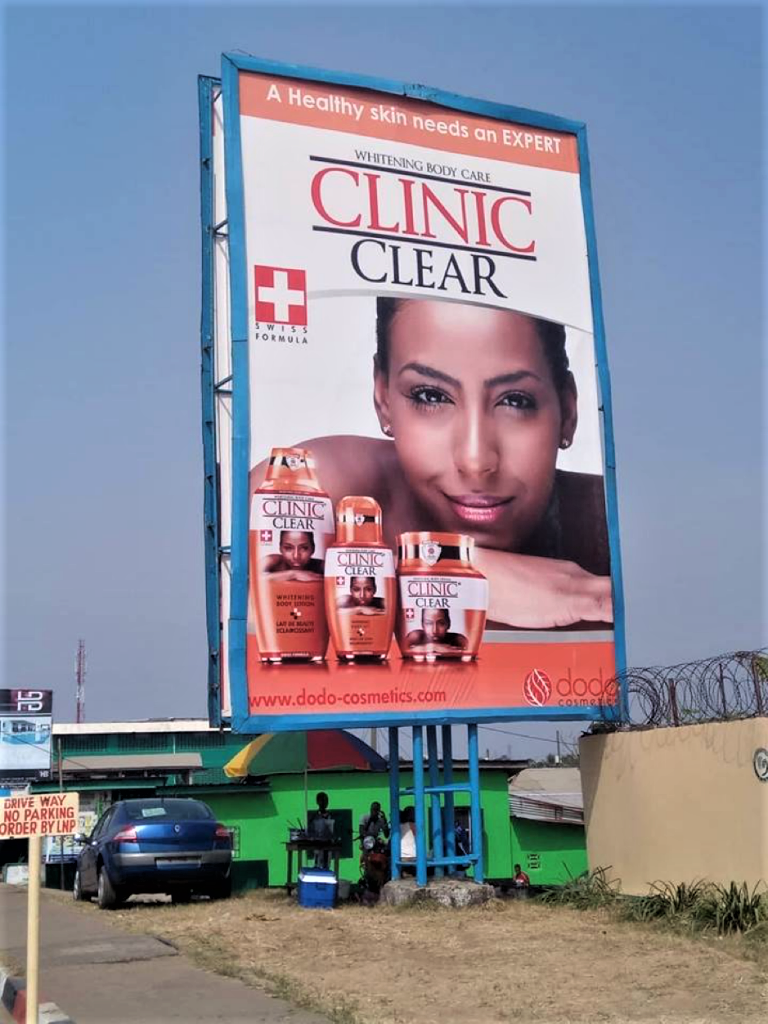
THE WEST AFRICAN NATION OF LIBERIA IS ALLOWING VENDORS TO ERECT HUGE BILLBOARDS ADVERTISING BLEACHING PRODUCTS IN AND AROUND MONROVIA. SIMULTANEOUSLY, RWANDA HAS BANNED SKIN BLEACHING PRODUCTS, WHICH THE GOVERNMENT DESCRIBES AS UNHEALTHY. VIA

There’s a Complex History of Skin Lighteners in Africa and Beyond AOC Body

Somali-American activists recently scored a victory against Amazon and against colourism, which is prejudice based on preference for people with lighter skin tones. Members of the non-profit The Beautywell Project teamed up with the Sierra Club to convince the online retail giant to stop selling skin lightening products that contain mercury.

After more than a year of protests, this coalition of antiracist, health, and environmental activists persuaded Amazon to remove some 15 products containing toxic levels of mercury. This puts a small but noteworthy dent in the global trade in skin lighteners, estimated to reach US$31.2 billion by 2024.

What are the roots of this sizeable trade? And how might its most toxic elements be curtailed?

The online sale of skin lighteners is relatively new, but the in-person traffic is very old. My new book explores this layered history from the vantage point of South Africa.

As in other parts of the world colonised by European powers, the politics of skin colour in South Africa have been importantly shaped by the history of white supremacy and institutions of racial slavery, colonialism, and segregation. My book examines that history.

Yet, racism alone cannot explain skin lightening practices. My book also attends to intersecting dynamics of class and gender, changing beauty ideals and the expansion of consumer capitalism.

Fresh Drive To Close Gaps on Health Issues Facing Africa's Women and Girls

Fresh Drive To Close Gaps on Health Issues Facing Africa's Women and Girls

In Africa today women still die needlessly during childbirth. They also fall pregnant when they aren’t ready, and don’t want to get pregnant. And there are still many obstacles on their path to living full and fulfilled lives.

Sexual and reproductive health and rights are fundamental to people’s health and survival, to economic development, and to the well-being of humanity. Several decades of research have shown that investment in sexual and reproductive health produces measurable benefits.

Governments have made major commitments to getting this right. But progress has been stymied because of weak political commitment, inadequate resources, persistent discrimination against women and girls, and an unwillingness to address issues related to sexuality openly and comprehensively.

This was the conclusion of a report on sexual and reproductive health produced last year by the global health research and policy organisation, Guttmacher Institute, and the academic journal, The Lancet.

A fresh effort is under way to close these persistent gaps. These are centre stage at a special summit in Nairobi being convened by the United Nations Population Fund along with the governments of Kenya and Denmark. Among those attending will be heads of state, ministers, parliamentarians, thought-leaders, technical experts, civil society organisations, grassroots organisations, and business and community leaders.

Read More