How DC Mayor Bowser Used Graffiti to Protect Public Space

How DC Mayor Bowser Used Graffiti to Protect Public Space

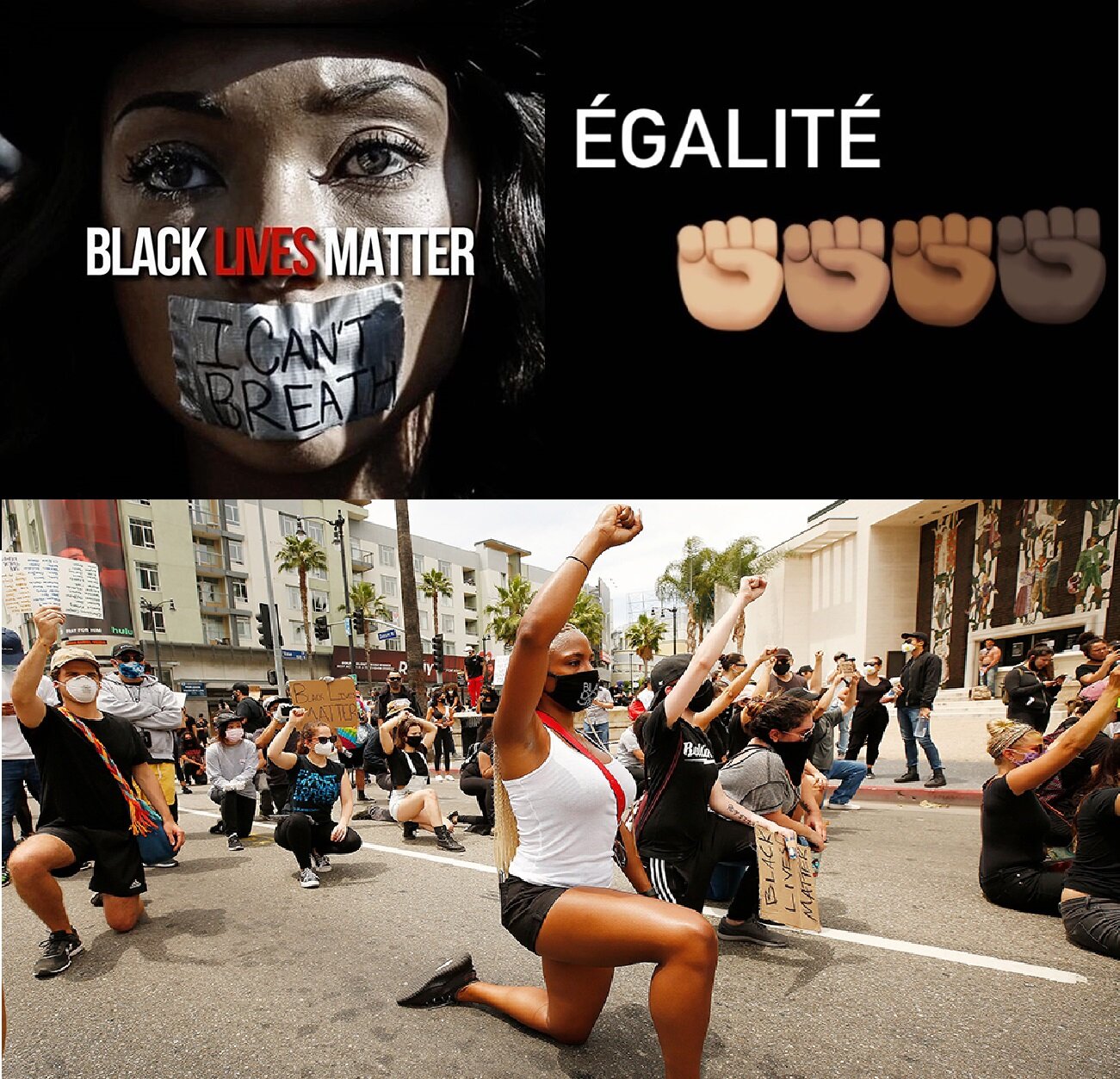
When President Donald Trump sent heavily armed federal law enforcement officers and unidentified officers in riot gear into Washington, D.C. during the height of protests recently, Mayor Muriel E. Bowser responded by painting “BLACK LIVES MATTER” directly on the street leading to the White House.

While many spoke of it as a daring political act, for artists like me, it was also an act of urban intervention, an artistic act intended to transform an existing structure or institution, that reclaimed public space back for the public. And she accomplished this with little physical matter at all.

Her action – expressing dissent by marking an oppressive environment – references graffiti, which has been called the “language of the ignored.”

Art scholars note that most types of graffiti are meant to claim or reclaim territory by those who are systematically excluded. “Writers” often work quickly and at night, when they are less likely to be seen and arrested for painting on others’ property without consent.

Bowser’s action would likely be considered vandalism if not for the fact that it was carried out by the city’s Department of Public Works, using city funds. She wielded municipal services as artistic tools to condemn another state-sanctioned action, the violence perpetrated against Black people.

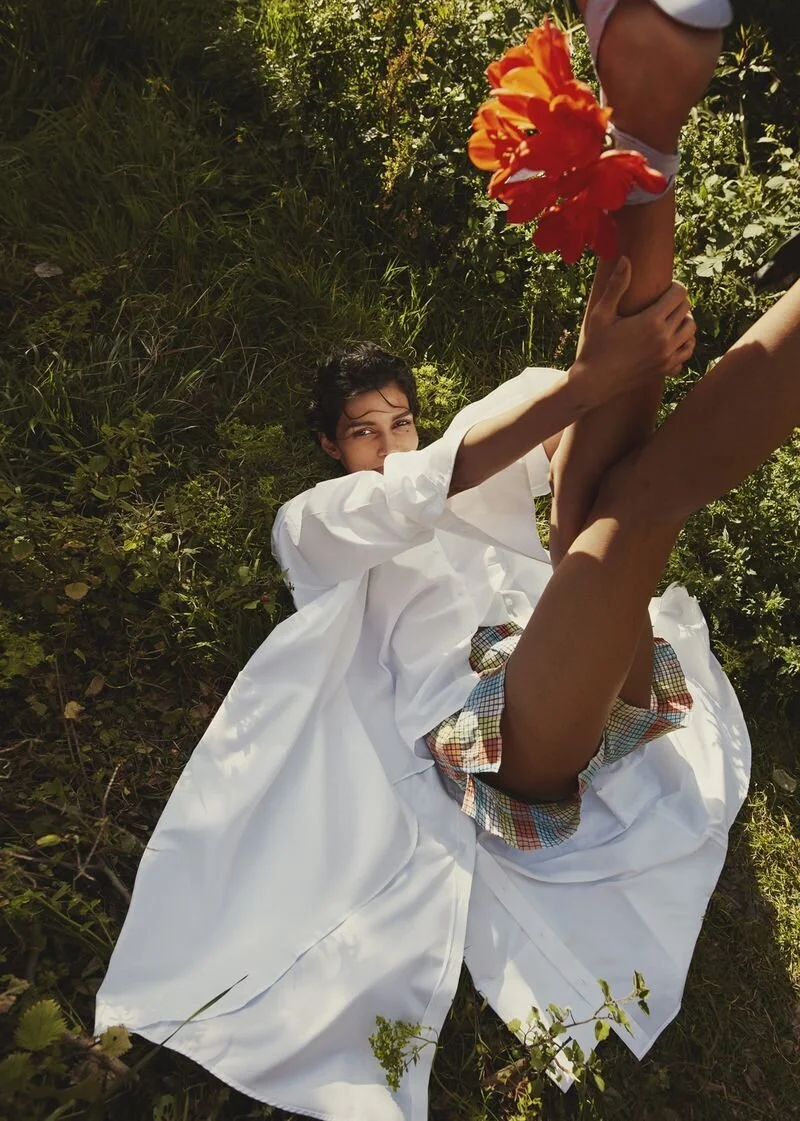
Ruth Akele Means Business by Fernando Gomez for Vogue Arabia June 2020

Ruth Akele Means Business by Fernando Gomez for Vogue Arabia June 2020

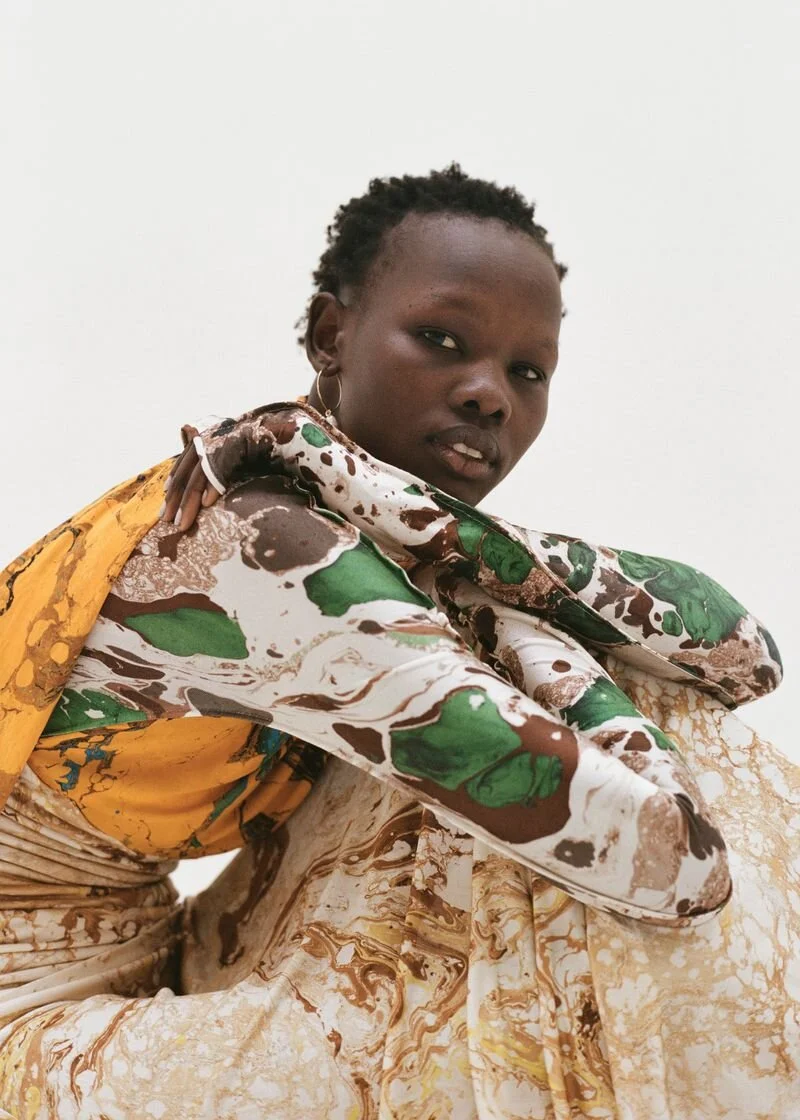
Nigeria-born model Ruth Akele is styled by Daniel Gonzalez Elizondo in bold colors tailoring for ‘Businesswoman’, lensed by Fernando Gomez for Vogue Arabia June 2020./ Makeup by Rosa Matilla

FENTY R6.20-DROP1 Campaign Lensed by Lea Colombo Honors Rebellious Creative Aesthetic

FENTY R6.20-DROP1 Campaign Lensed by Lea Colombo Honors Rebellious Creative Aesthetic

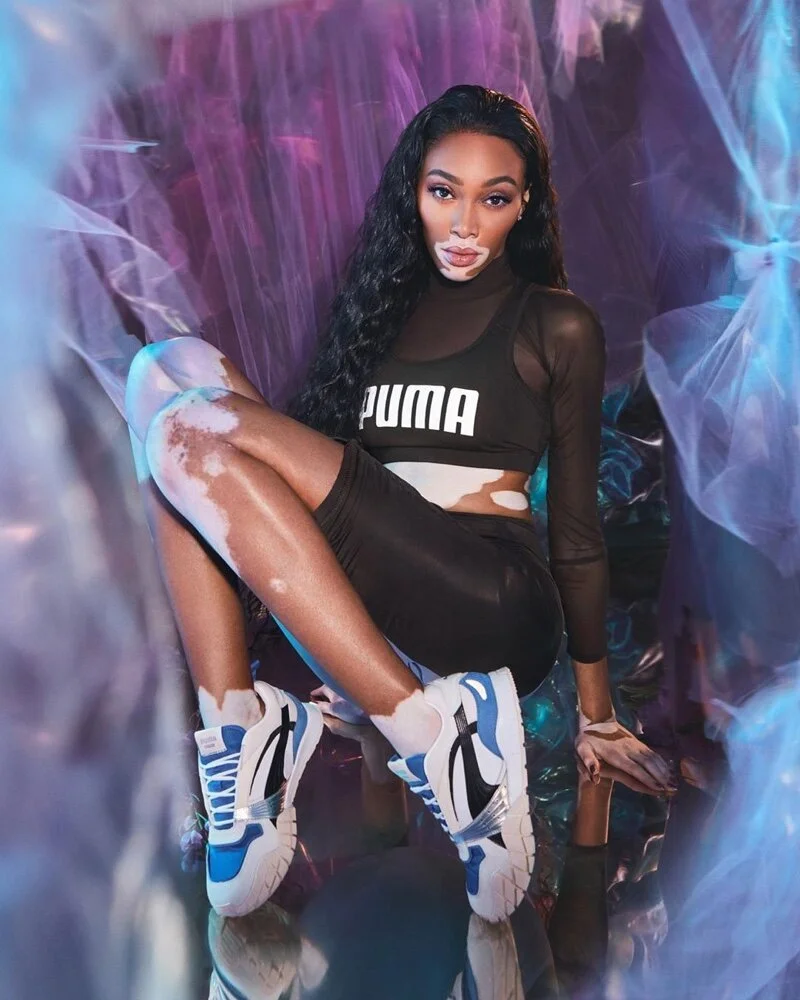
Rihanna’s Fenty luxury brand brightens spirits today June 11, with “Release 6-20”, the first of three separate drops across June. Lensed by London-based, South Africa born photographer Lea Colombo, the campaign’s focus is models, artists and musicians who “embody the bright spark energy of the release.”

They include Amrit, Assa Baradji, Coucou Chloe, Daniel Gonzalez, Lilan Barru, and Mao Xiaoxing./ Art direction by Jean-Baptiste Talbourdet and Lolita Jacobs; casting direction from Samuel Ellis Scheinman. Video direction by Julien Pujol and Roberto Colombo. 

“In a time where fighting for global freedoms takes center stage, this release speaks to a generation that is a different kind of creative, and a different kind of rebellious,” says Fenty’s press release. The collection honors “decades of youth aesthetics and styles that emerged during periods of steep social change, each act of the month-long release celebrates a different facet of youth, expressed through varied style cues.”

The collection is long on psychedelic, tie-dye prints, baggy rave silhouettes, grunge hoodies and asymmetric dresses. The campaign will continue into July.

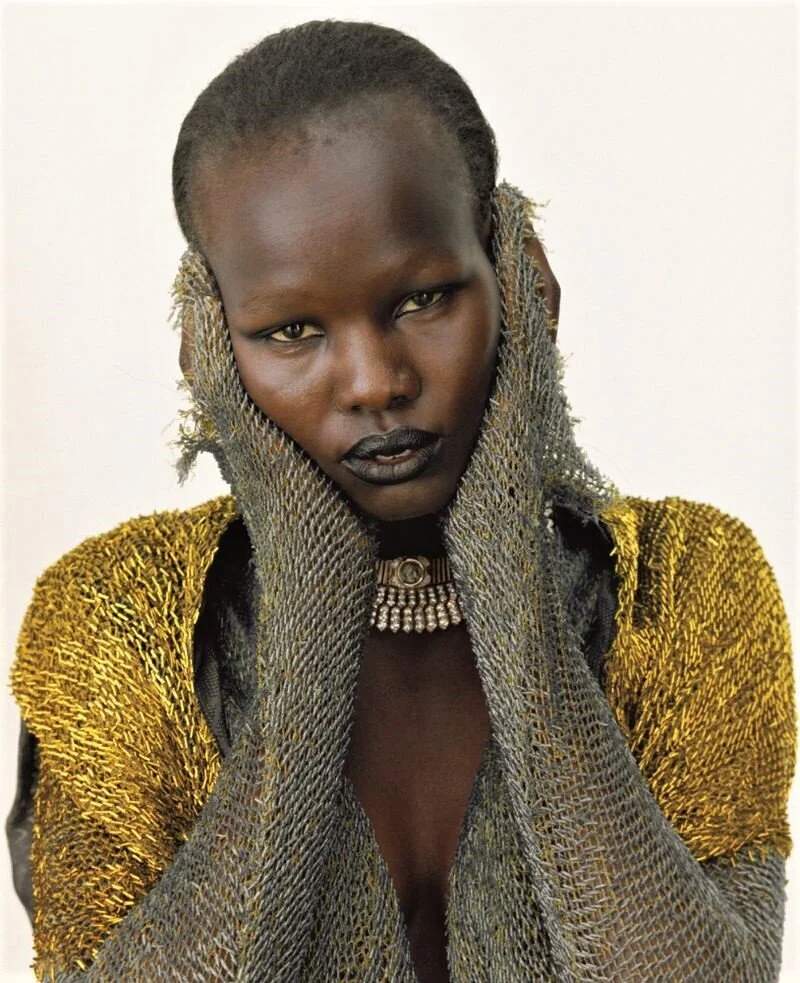
Emmanuel Adjaye by Jon Gorrigan for The Guardian Fashion June 2020

Emmanuel Adjaye by Jon Gorrigan for The Guardian Fashion June 2020

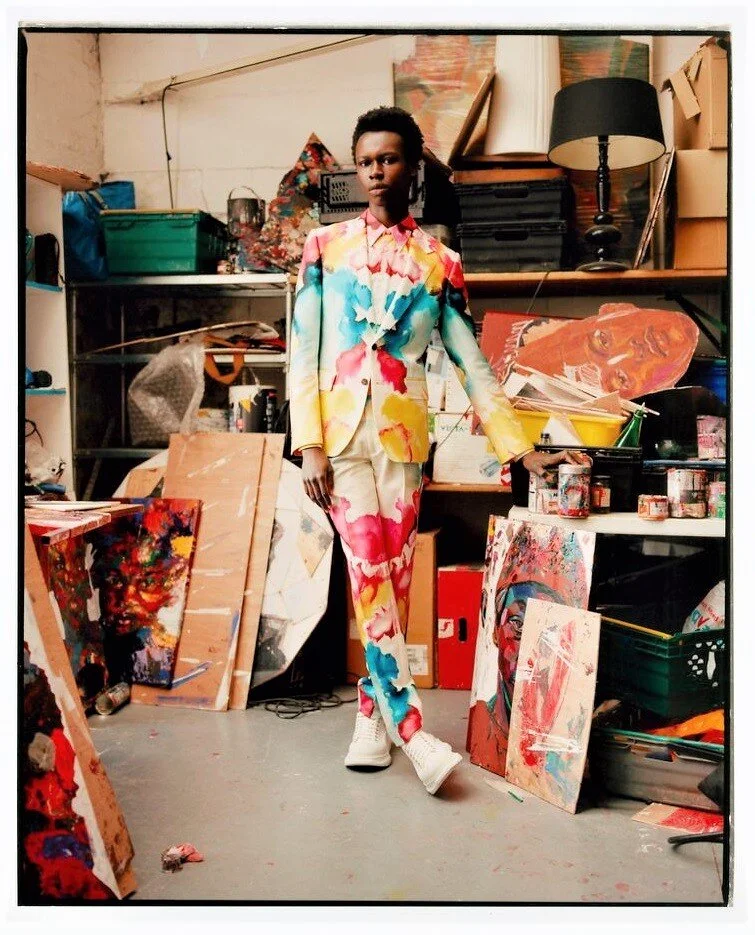
The Guardian’s fashion editor Helen Seamons puts menswear artistry center stage in ‘A Brush With Greatness’, photographed in the studio of British artist Matt Small. Photographer Jon Gorrigan captures model Emmanuel Adjaye, with Seamons also interviewing Small for “I want to get a sense of Jazz in my work.”

June 9, 2020 George Floyd Buried in Houston | June 10, 2020 Samira Nasr Now Leads Harper's Bazaar US

June 9, 2020 George Floyd Buried in Houston | June 10, 2020 Samira Nasr Now Leads Harper's Bazaar US

On this day June 10, 2020, you might think that the landing page of Harper’s Bazaar US has left the fashion business. I considered posting an old Temptations song ‘Ball of Confusion’ but what we are actually seeing is a ‘Ball of Clarity’.

Somebody needs to write a new song to describe this moment in America and the fashion industry. What does fashion even mean at this point?

One answer is the escapist route of the Chanel Cruise show, an effort that “totally ignored the cataclysmic context in which they would be worn. It was more like a return to some of high fashion’s escapist failings of the past rather than a meaningful step toward the future,” wrote Vanessa Friedman of the New York Times.

If this is how a fashion house “adapts” to the changing world — if these are the clothes that are the response, if escapism is presented as an answer, if photographs and video simply attempt to mimic what once was, as opposed to reframing what could be, if a statement from a designer can’t even acknowledge the pain and complications of her consumers, even the rich ones — then, pretty as the products may be, it is not doing its job.

In the pain and promise of our global fashion moment, voices matter. Who steps up? Who stands down?The fashion gods have delivered a new voice to the dialogue.

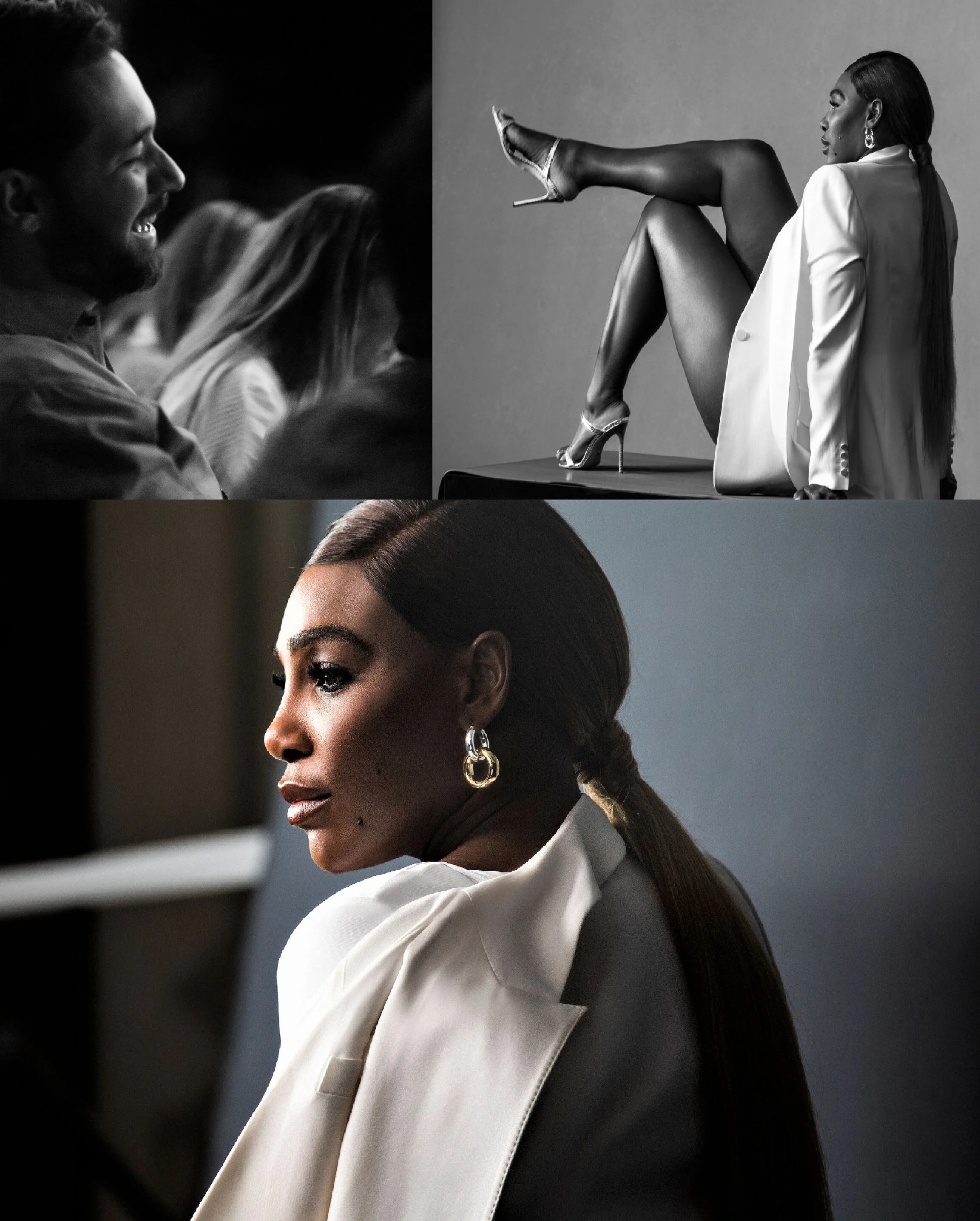
The new editor-in-chief of Harper’s Bazaar US, Samira Nasr now carries a bigger megaphone. Talk about an epic moment for a fashion editor to take the reins of a major US fashion magazine.