King Charles III Joins TIME 100 Most Influential People List 2023 As Beloved Mushroom Hunter
/
Daily excerpts of new fashion, culture, lifestyle, activism and women's news. RSS home base.

Vogue India 'A Paradigm Shift' Explores Future of Craftsmanship in Post COVID-India AOC New Humanism
Vogue India explores ‘A Paradigm Shift’, the impact of COVID-19 on India’s apparel industry in general and the future of craftsmanship in general in this new world. Prihanka Kapadia celebrates the beautyof ‘made in India’ with heavy emphasis on India’s incredible handiwork. She speaks to 15 fashion experts about their plans going forward, as they discuss the impact of our new pandemic-driven pause on India’s fashion industry.
Bikramjit Bose photographs the fashion images, styled by Priyanka Kapadia. Models include Nandini, Kripali, and Anugraha at Feat Artists. Atelier photographs are by Avani Rai, Vidura Jang Bahadur, Sounak Banerjee, Aaditya Gangwar and Hashim Badani. / Hair and makeup by Mitesh Rajani

Trump Rally in Tulsa, A Day After Juneteenth, Awakens Memories of 1921 Racist Massacre AOC New Humanism
For only the second time in a century, the world’s attention is focused on Tulsa, Okla. You would be forgiven for thinking Tulsa is a sleepy town “where the wind comes sweepin’ down the plain,” in the words of the musical Oklahoma!.
But Tulsa was the site of one of the worst episodes of racial violence in American history, and a long, arduous process of reconciliation over the Tulsa Race Massacre of 1921 was jarred by President Donald Trump’s decision to hold his first campaign rally there since the COVID-19 pandemic began.
The city is on edge. Emotions are raw. There’s anxiety about a spike in coronavirus cases, but lurking even deeper in the collective psyche is a fear that history could repeat itself. Tens of thousands of Trump supporters will gather close to a neighbourhood still reckoning with a white invasion that claimed hundreds of Black lives.
A Trump rally near a site of a race massacre during a global pandemic already sounded like a recipe for a dangerous social experiment. But then there was the matter of timing. The rally was to be held on Juneteenth (June 19), a holiday commemorating the day slaves in the western portion of the Confederacy finally gained their freedom.
Normally, Juneteenth in Tulsa is one big party, the rare event that brings white and Black Oklahomans together. But fears about spreading COVID-19 led organizers to cancel the event. Then came the protests over the murder of George Floyd. During those demonstrations in Tulsa, a truck ran through a blockade of traffic, causing one demonstrator to fall from a bridge. He is paralyzed from the waist down.
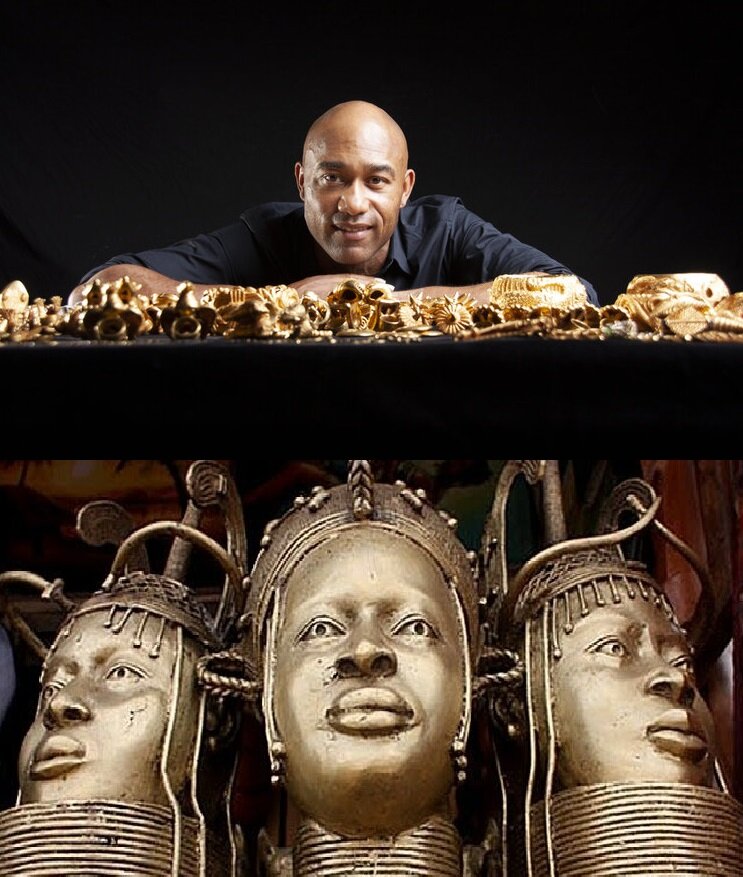
TOP: GUS CASELY-HAYFORD. COURTESY OF THE VICTORIA AND ALBERT MUSEUM, LONDON.. BOTTOM: THE BENIN ROYAL MUSEUM WILL HOUSE MANY OF THE BRONZES LOOTED BY THE BRITISH AND SPREAD ACROSS MULTIPLE MUSEUMS AND INDIVIDUAL COLLECTIONS.
As African Art Thrives, Museums Grapple With Legacy of Colonialism New Humanism
In 1897, 1,200 British troops captured and burned Benin City. It marked the end of independence for the Kingdom of Benin, which was in the modern-day Edo state in southern Nigeria. In addition to razing the city, British troops looted thousands of pieces of priceless and culturally significant art, known as the Benin bronzes.
More than a century later, the museums that house these pieces are grappling with the legacy of colonialism. Leaders in Africa have continued their call to get the Benin bronzes and other works of art taken by colonists back, at the same time as new museums open up across Africa. (In 2017, the Smithsonian's National Museum of African Art organized its first traveling exhibition in Africa showcasing the work of the Nigerian photographer Chief S. O. Alonge. The show, catalogue and educational program were organized and produced in partnership with Nigeria's national museum in Benin City. Alonge was the official photographer to the Royal Court of Benin.)
The British Museum, which has the largest collection of Benin bronzes, is in communication with Nigeria about returning the bronzes. They’re waiting for the completion of the Benin Royal Museum, a project planned for Benin City. Edo state officials recently tapped architect David Adjaye, who designed the National Museum of African American History and Culture, to do a feasibility study on the site.
All content Copyright © AnneofCarversville.com 2007-2026 or their respective owners where indicated.