Artist Betye Saar, the Aunt Jemima Revolution, and a New Humanism
/
Artist Betye Saar, the Aunt Jemima Revolution, and a New Humanism AOC New Humanism
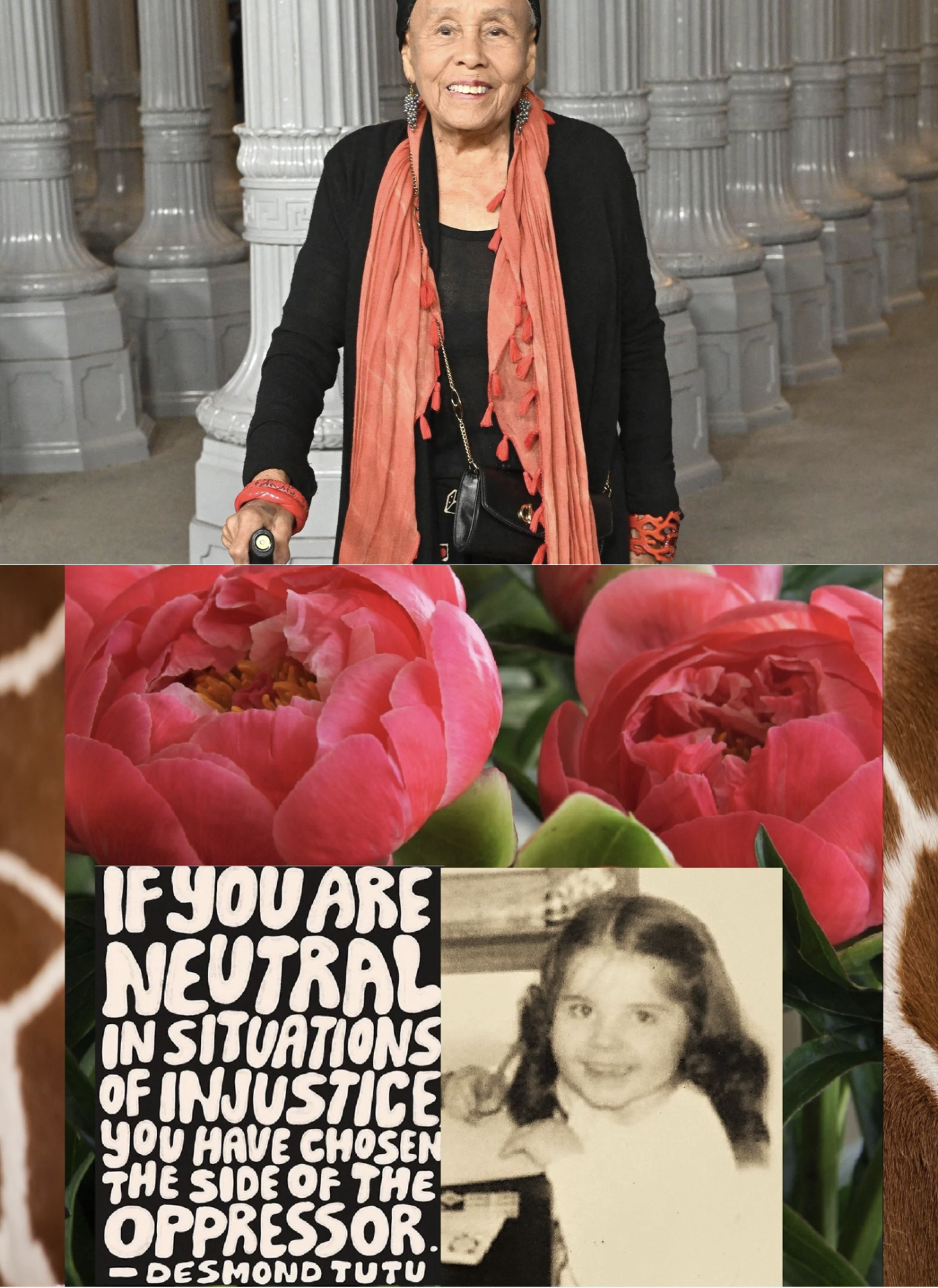
Artist Betye Saar passed at the age of 99 on Sunday, July 26th, 2026 — just four days shy of her 100th birthday on July 30th. As a central figure of the Black Arts Movement, the artist transformed racist memorabilia into powerful symbols of resistance with her Assemblage Art.
The Los Angeles Times interviewed her for a story that ran on July 15, 2026. Visiting Saar at her home studio in Laurel Canyon, where she’s lived in since 1962, writer Tara Anne Dalbow detailed the artist’s homage to human history:
Saar’s studio is packed with relics gathered from sidewalks and swap meets in L.A., and from trips to Marrakesh, Mexico, Nigeria, Haiti and Brazil. Antique globes are mixed with model boats, window panes, wooden masks and painted watermelons. Mercantile scales and rusted bird cages are scattered across crowded shelves. Neatly labeled drawers hold hand fans, plastic snakes, buttons, buckles.
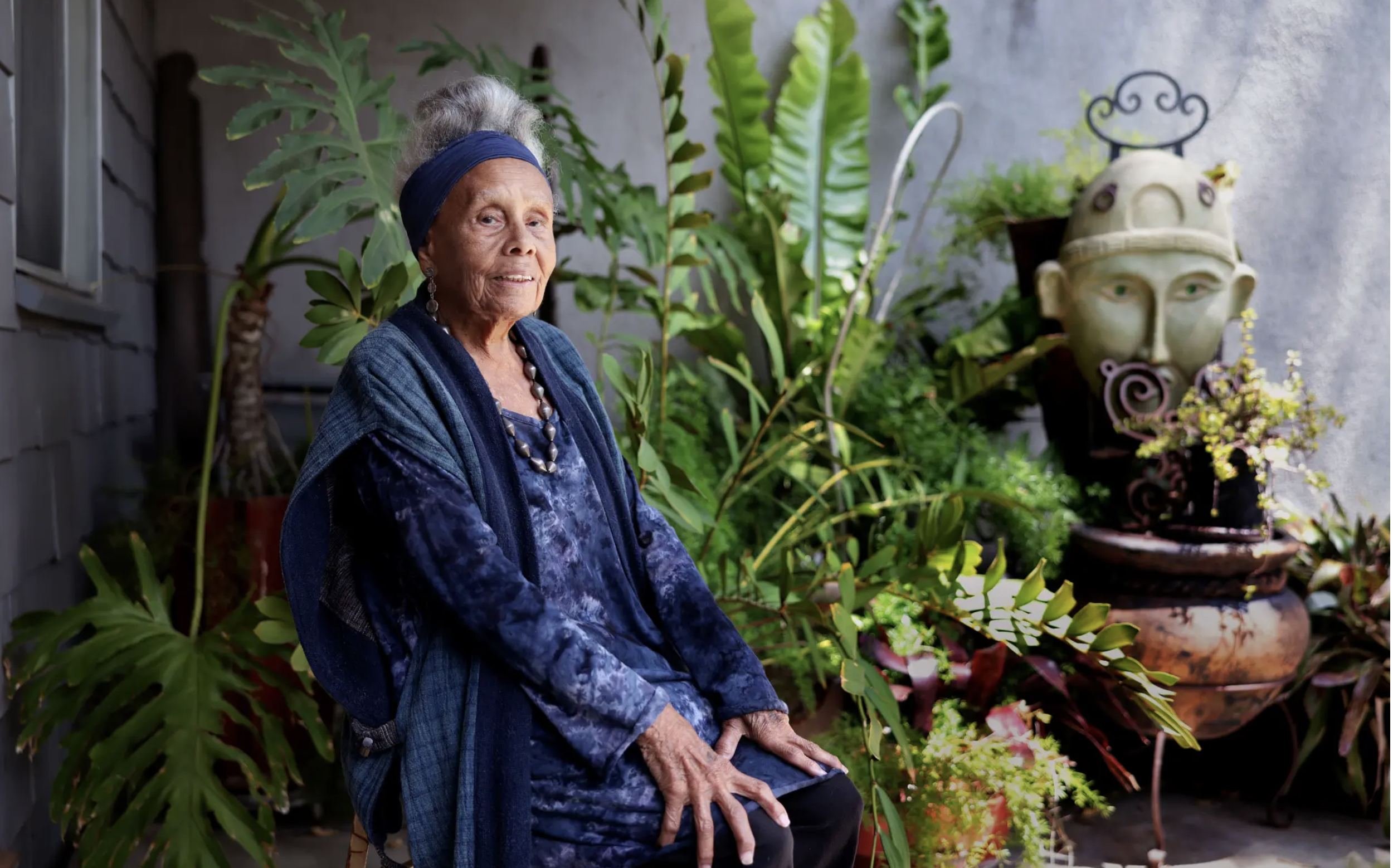
Betye Sayre by Christina House for Los-Angeles Times July 2026
A Landmark Artwork: ‘Liberation of Aunt Jemima, 1972’
Watching the video ‘Betye Saar: Drifting Toward Twilight’, we learn that the shadow box below titled ‘Liberation of Aunt Jemima, 1972’ was Saar’s first artistic assemblage offering.
Protest piece: Saar explicitly designated the work as her very first political protest, born out of rage and helplessness after the 1968 assassination of Martin Luther King Jr.
Female warrior figure: She described turning the subservient image into a militant fighter for Black liberation and women's rights.
Symbols of empowerment: Saar referred to the inserted rifle and hand grenade not as an endorsement of actual violence, but as attention-getting tools of personal power.
True light / Transplant: The artist later reflected that she saw Aunt Jemima in her “true light” as a “transplanted African Queen, a survivor, a nurturer, a free spirit, a warrior.”
The historical exhibition ‘Los Angeles 1955-1985: Birth of an Art Capital’ took place at the Centre Pompidou in Paris from March 8 through July 17, 2006.
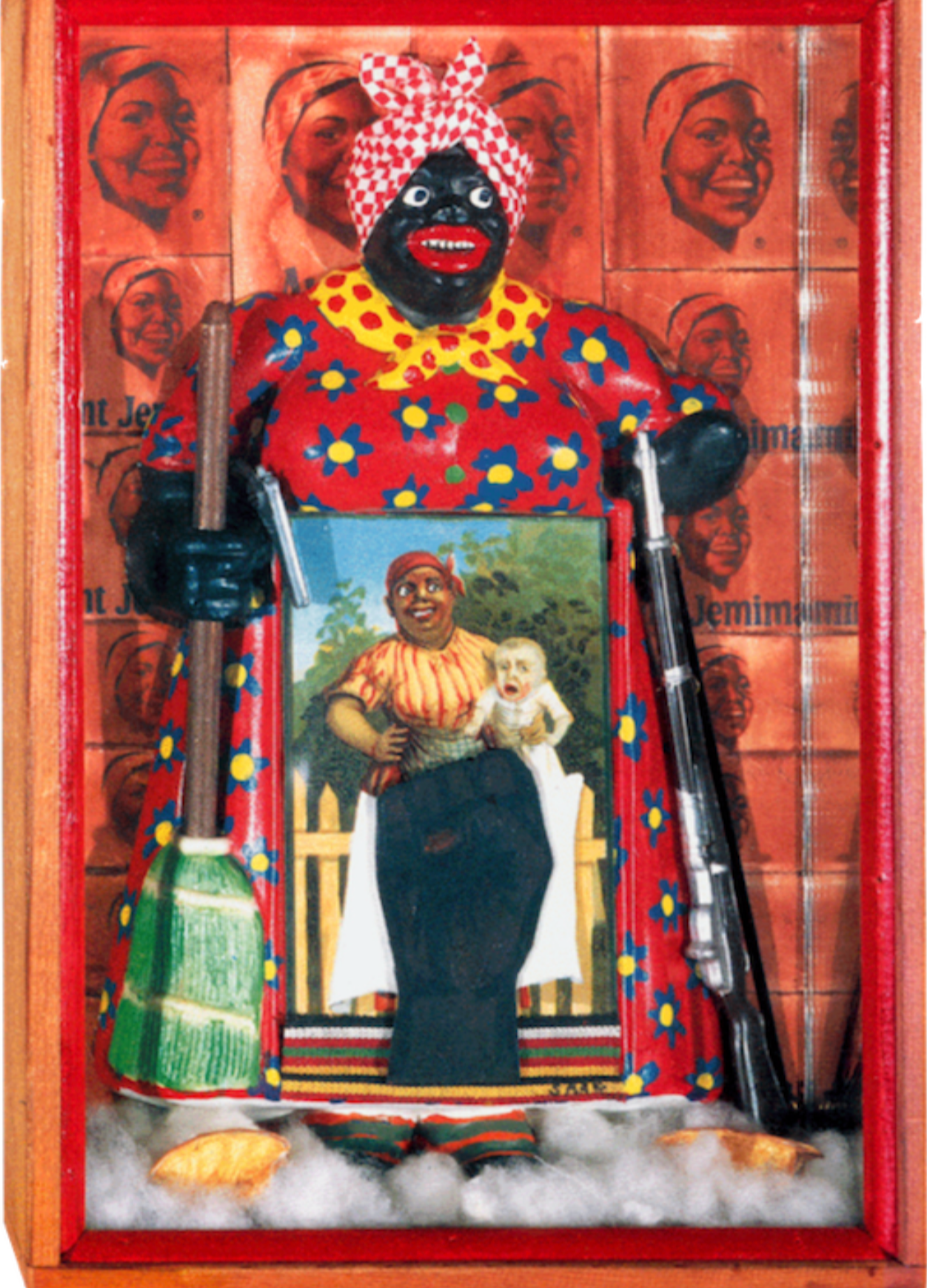
Betye Saar, Liberation of Aunt Jemima, 1972, assemblage, 11-3/4 x 8 x 2-3/4 inches (Berkeley Art Museum and Pacific Film Archive)
From Prada to New Humanism
My first deep dive into Saar’s work was covering her 2016-2017 exhibition sponsored by Prada in Milan—the first time her ‘Black Life’ work was shown in Italy. Hosted at Fondazione Prada in Milan from September 15, 2016 to January 8, 2017, ‘The Liberation of Aunt Jemima, 1972 ‘ was one of 80 works in the show, and the one always most in demand, according to curators and gallery-owners.
Looking back at my original article, a key word blinked loudly from the text. I described Betye Saar as a "humanist." Today I call the high-impact artist a “New Humanist”, a distinction based on an intense period in recent years of wanting to make sense of my beliefs in a coherent structure or philosophy for Anne.